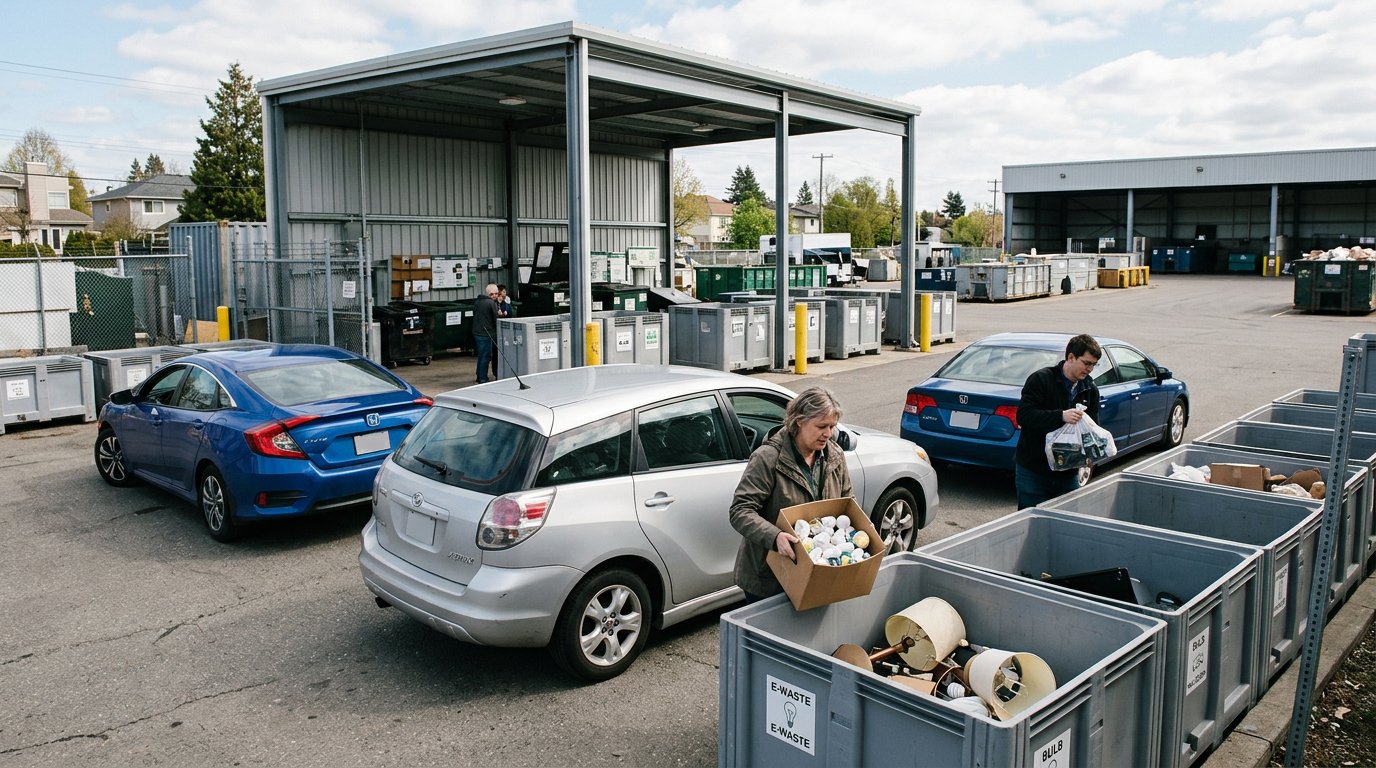
What you do with a dead bulb depends entirely on what kind it is. Two types contain mercury and must go to a collection point. Two do not and can go in household waste. Getting this wrong is common, and only one direction of the mistake matters.
Which bulbs contain mercury
Compact fluorescent lamps and fluorescent tubes contain mercury in small amounts, sealed in the glass. They must not go in a household bin, because breaking them in a collection vehicle releases it. Both are accepted at household hazardous waste facilities, and many home improvement and hardware retailers run in-store collection points for CFLs and tubes.
LED and halogen bulbs contain no mercury. LEDs are electronics rather than lamps in the strict sense and are accepted at electrical recycling points, though they are not hazardous. Halogen and old incandescent bulbs are just glass and metal filament, are not recyclable in kerbside glass collection because the glass type differs, and go in household waste.
Where to take them
| Bulb type | Where it goes |
|---|
| CFL | Retailer collection point or household hazardous waste |
| Fluorescent tube | Household hazardous waste, or a retailer that takes tubes |
| LED | Electrical recycling point, or household waste where no scheme exists |
| Halogen or incandescent | Household waste, wrapped so it does not cut the bag |
If a CFL or tube breaks
Open a window and leave the room for a quarter of an hour before clearing up, which lets the vapour disperse. Do not vacuum it, because a vacuum spreads the mercury and contaminates the machine. Pick up the fragments with stiff card and sticky tape, seal everything in a jar or a sealed bag, and take it to a hazardous waste point rather than the bin.
Why kerbside glass will not take any of them
Bulb glass is a different composition from container glass and contaminates the melt, and every type has metal and often electronics attached at the base. A bulb in the glass bin is a rejected load rather than a recycled bulb.
Related guides
Frequently Asked Questions
Where can I dispose of a light bulb for free near me?
Most US cities offer free light bulb disposal through bulky-waste pickup days (schedule via your city's 311 line). Best Buy, Home Depot and Lowe's also accept many appliances free, especially with a replacement purchase.
How much does light bulb disposal cost?
Free with most retailer take-back programs and municipal bulky-waste pickup. Standalone services run $40-$120. Manufacturer mail-back is usually free with a prepaid shipping label.
Will the city pick up my old light bulb?
Not usually as bulky waste, because bulbs are small and the mercury-containing types need separate handling. Household hazardous waste facilities take CFLs and tubes, and many home improvement retailers run in-store collection points.
Can I donate an old light bulb?
Working spare bulbs of a current fitting can be donated to reuse charities and community projects, and are genuinely useful. A dead bulb has no reuse value and needs the recycling route for its type.
Is it legal to throw a light bulb in the trash?
It depends on the bulb. CFLs and fluorescent tubes contain mercury and must go to a hazardous waste point or a retailer collection scheme rather than a bin. LED, halogen and incandescent bulbs contain no mercury and can go in household waste, though LEDs are better taken to an electrical recycling point.