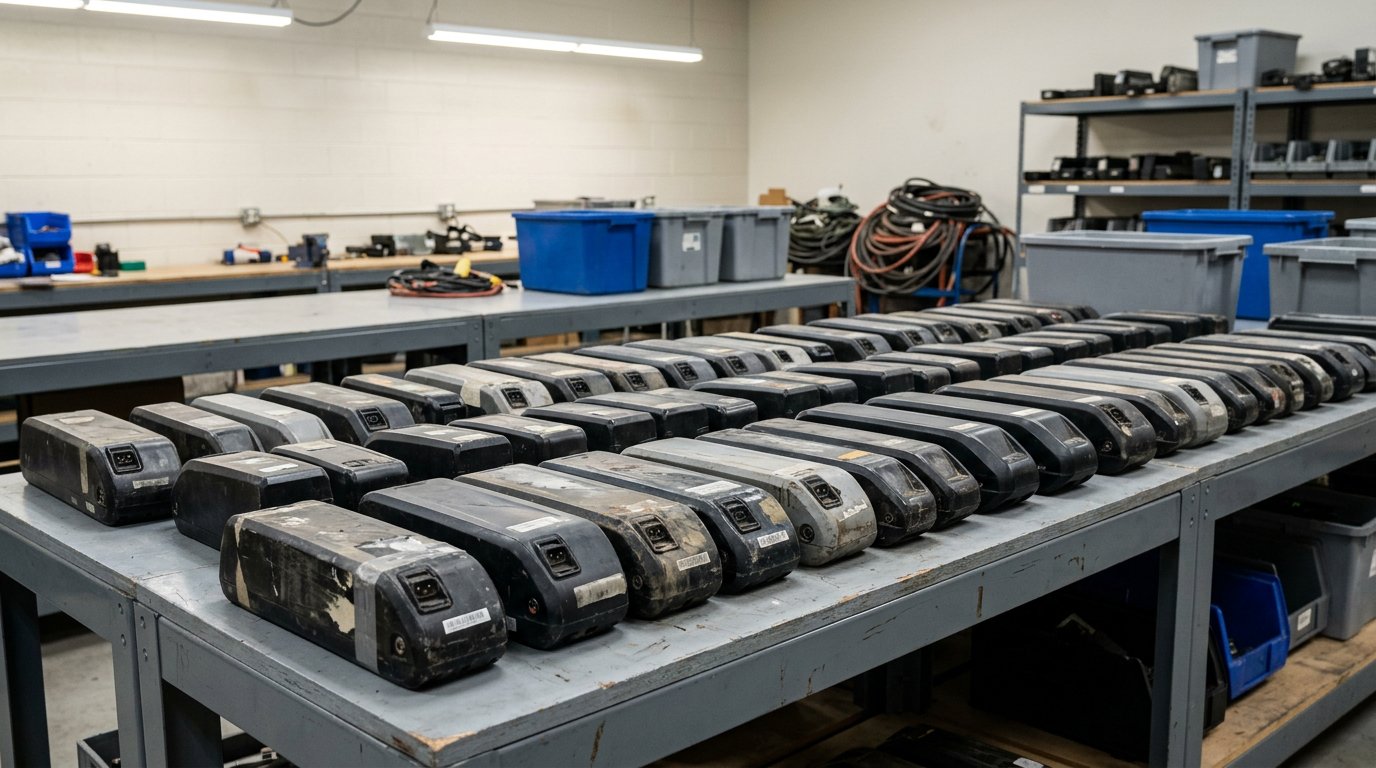
An e-bike battery is the single most dangerous thing most households will ever put in the bin, and it must never go in one. These are large lithium packs, and when they are crushed in a collection vehicle they do not smoulder, they ignite. There are free routes for them, and using one matters more here than for any other item on this site.
Where to take an e-bike battery
A bike shop. Many bike retailers accept e-bike batteries for recycling whether or not you bought the bike there, because dedicated collection schemes for exactly this pack type operate through the bike trade.
A dedicated battery collection scheme. Battery recycling networks operate drop-off points specifically for larger lithium packs, separate from the tubs that take AAs. Their site finders will tell you which nearby locations accept e-bike and power tool packs rather than only household cells.
The manufacturer or the retailer who sold it. Producers are obliged in most jurisdictions to provide a take-back route for the batteries they place on the market. Ask before assuming there is a charge.
A household hazardous waste facility, where no closer scheme exists. Call first, because not all sites accept packs of this size.
A damaged pack needs to be declared
If the casing is cracked, swollen or has been in a crash, or if the battery has been in water, say so when you hand it over and do not put it in a normal collection box. Damaged cells are handled differently, usually in a sand-filled or fire-rated container. Never post a damaged lithium battery, and never store one indoors or against a means of escape while you wait for collection.
What it costs
| Route | Typical cost |
|---|
| Bike shop take-back | Free |
| Dedicated battery collection scheme | Free |
| Manufacturer or retailer take-back | Free |
| Household hazardous waste facility | Free, call ahead |
Do not open the pack
An e-bike battery is a series of cells with a management board, wired at a voltage that is dangerous to handle and packaged so that puncturing a cell starts a fire that water will not put out. There is no useful reason for an owner to open one, and rebuilding packs from salvaged cells is how a large share of e-bike fires start.
Related guides
Frequently Asked Questions
Where can I dispose of a e-bike battery for free near me?
Most US cities offer free e-bike battery disposal through bulky-waste pickup days (schedule via your city's 311 line). Best Buy, Home Depot and Lowe's also accept many appliances free, especially with a replacement purchase.
How much does e-bike battery disposal cost?
Free with most retailer take-back programs and municipal bulky-waste pickup. Standalone services run $40-$120. Manufacturer mail-back is usually free with a prepaid shipping label.
Will the city pick up my old e-bike battery?
Rarely through normal collections. Batteries need a separate stream, so the routes are a bike shop, a dedicated battery collection scheme, or a household hazardous waste facility. Some councils run a battery kerbside service for small cells only, not packs this size.
Can I donate an old e-bike battery?
A healthy pack for a current bike model can be worth reselling or passing on, and some shops will test one. A pack that is swollen, damaged or several years past its useful capacity should be recycled rather than passed to someone else.
Is it legal to throw a e-bike battery in the trash?
No. Lithium batteries are banned from household waste and from kerbside recycling everywhere, because crushed cells start fires in collection vehicles and sorting facilities. An e-bike pack must go to a battery collection point, a bike shop or a hazardous waste facility.