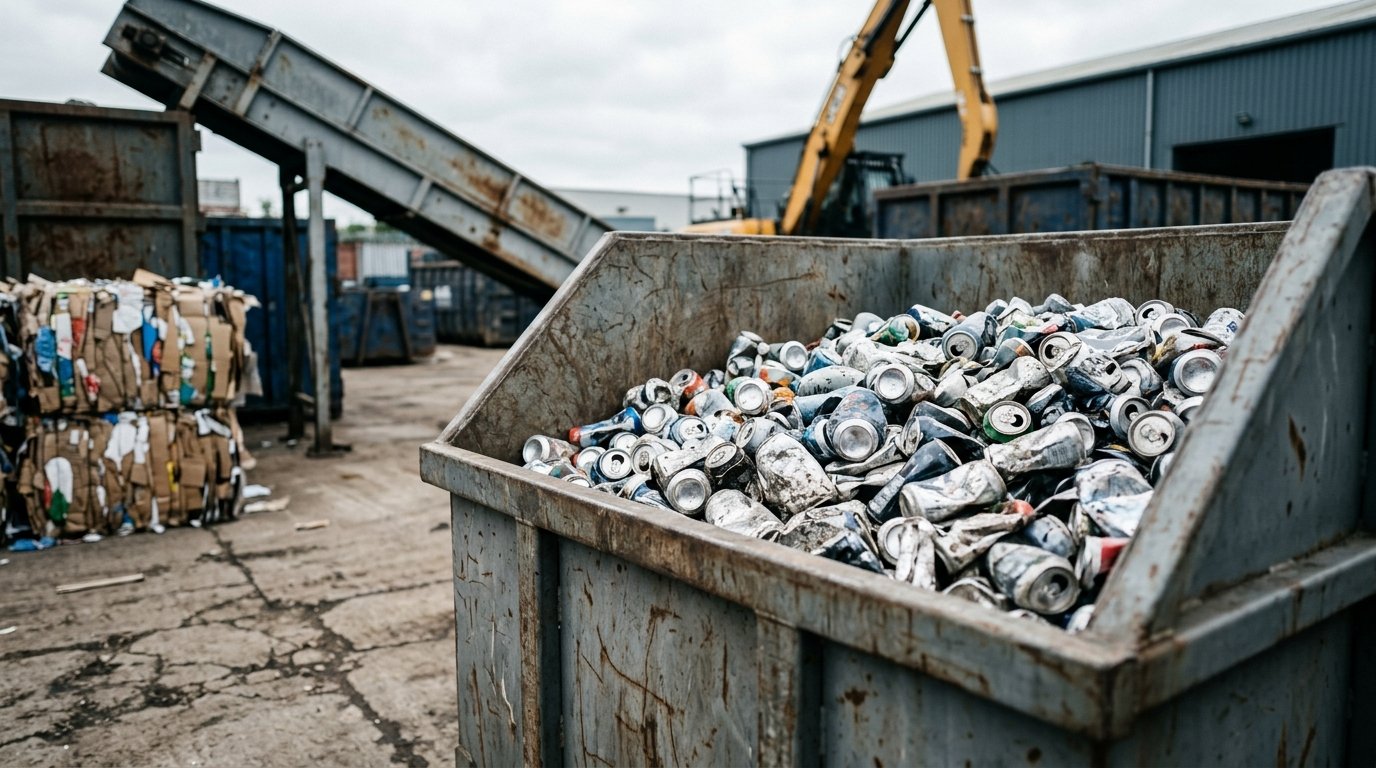
Yes, aluminum cans are 100% recyclable and can be recycled indefinitely. To recycle them properly, rinse out the cans and place them in your curbside recycling bin; most cities in the United States accept aluminum cans this way. According to the Aluminum Association, over 75% of all aluminum produced since 1888 is still in use today, highlighting the material's sustainability.
Aluminum cans are made from a lightweight yet durable metal alloy that allows for easy reshaping without losing quality. This means they can be recycled repeatedly, reducing the need for new aluminum production, which requires significant energy and resources.
y from other materials due to their metallic nature. Once sorted, these cans go through a refining process where they're melted down and reshaped into new products without any loss in quality or purity.
How to Recycle Aluminum Cans Properly
First, rinse the can to remove residue. Flatten it if you have room in your recycling bin-this helps save space but isn't necessary for processing. In the US, simply put them out with your curbside collection on designated days. For those living in the UK, kerbside collections are also widely available.
For areas without kerbside pickup, consider drop-off locations like TerraCycle or local recycling centres such as Recycle Now. Both offer convenient options for getting rid of aluminum cans responsibly. In 2019 alone, over a billion pounds of aluminum were recycled in the US through various programmes and initiatives, significantly reducing environmental impact.
According to the Apple Environmental Report 2024, apple recovered over 1 tonne of gold from recycled devices in 2023.
Alternatives to Throwing Aluminum Cans Away
Instead of tossing aluminum cans into your regular waste bin, consider reusing them creatively or donating them for fundraising efforts. Schools and sports teams often collect empty cans to raise money. If you're crafty, turn your cans into planters or decorative items.
FAQ
What happens if I don't recycle my aluminum can?
If you don't recycle your aluminum cans, they end up in landfills where they take hundreds of years to decompose. This leads to unnecessary waste and environmental degradation. Recycling them saves natural resources and energy.
Can I mix different types of metals when recycling aluminum cans?
No, keep aluminum cans separate from other metal items like steel or tin. Mixing these materials can contaminate the recycling process, making it harder to recycle effectively.
How much does recycling one aluminum can save in energy?
Recycling just one aluminum can saves enough energy to power a 35-watt
light bulb recycling for over 24 hours. This significant reduction in energy consumption helps lower greenhouse gas emissions and reduces the carbon footprint associated with new production.
Sources
- World Economic Forum
- Apple Environmental Report 2024
- BankMyCell 2024
Can You Recycle Aluminum Cans?: framework + alternatives + FAQs (2026-05-20)
Practical 5-step process
- Confirm device condition + age. Working post-2018 device → trade-in route. Older or broken → recycling route. Compare via Trade-In Best Price Finder before committing to recycling.
- Sanitise the device. Sign out of cloud services (iCloud, Google, Microsoft, Samsung). Factory reset via Settings menu. For sensitive data: certified ITAD provider with NIST data sanitisation standard sanitisation - see Hard Drive Destruction Cost Calculator.
- Find a compliant disposal route. Manufacturer take-back (free for like-for-like purchases under EU WEEE / UK WEEE / select US state laws), retailer drop-off (free at most major retailers), or certified local recycler. Use our Recycling Locator for nearby options.
- Document the disposal. Get a Certificate of Destruction for any data-bearing device (free template via our GDPR Data Erasure Certificate Generator). Keep for 3-7 years depending on data classification.
- Verify the downstream certification chain. Reputable recyclers partner with R2v3 / R2 vs e-Stewards / ISO 14001 certified processors. Ask which standard the downstream processor holds before drop-off.
Why this matters legally
Skipping compliant disposal has measurable penalty exposure:
- EU WEEE Directive 2012/19/EU + UK WEEE Regulations 2013: producer + waste-generator liability. Penalties typically £5,000-£50,000 per incident under environmental enforcement.
- US state what is e-waste laws: 25 states have mandatory laws as of 2026. Penalties range $1,500-$25,000 per incident (California Universal Waste Rule, New York Electronic Equipment Recycling and Reuse Act).
- EPA RCRA 40 CFR Part 273: federal Universal Waste Rule covers e-waste. Up to $76,764 per day per violation as of 2026.
- UK GDPR + EU GDPR Art 32: personal data on disposed devices triggers liability if not properly sanitised. Penalties up to £17.5M or 4% global turnover.
Check your specific risk via E-Waste Fines Checker.
Three common consumer mistakes
- Putting electronics in general waste. Most jurisdictions explicitly ban this; municipal collection rejects loads at the kerb.
- Trusting "free pickup" without verifying certification. Some scrap collectors export to non-OECD countries (violates e-Stewards + Basel Convention). Always ask for R2v3 or e-Stewards certificate before handing over devices.
- Wiping data via factory reset only on SSDs. Factory reset on SSD does NOT cryptographically erase - drive may still have recoverable data. Use NIST data sanitisation standard Purge for SSDs.
Frequently asked questions
Is electronics recycling always free? For consumer drop-off and mail-in: yes, free at point of use under producer-pays framework. Exceptions: bulk appliance pickup ($25-$50), CRT TVs/monitors ($19-$50), oversized batteries.
Will the recycler resell my data? Reputable recyclers either (a) wipe to NIST 800-88 standard before any onward sale, or (b) physically destroy data-bearing media before reuse path. Ask which method applies before drop-off.
What happens if my device still has value? Don't recycle - trade in first. Even a 5-year-old smartphone often fetches £25-£80 trade-in vs $0 recycling. Compare via Trade-In Best Price Finder.
Related guides + tools
---
Framework verified against EU WEEE Directive 2012/19/EU + UK WEEE Regulations 2013 + EPA RCRA 40 CFR Part 273 + US state e-waste laws + NIST SP 800-88 Rev 1 as of 2026-05-20. Operated by Defining Style Limited (UK Companies House 10572391, ICO Registration ZA711914). Rules update annually - verify current penalties on enforcement-authority sites before relying on figures.
Aluminum cans: full recycling guide + 2026 cash value
How much money are aluminum cans worth?
US scrap-metal payback rates as of May 2026 (London Metal Exchange spot averaged $2,420/ton x 25-35% recycler discount):
- Cash redemption at buy-back centres: $0.40-$0.70 per pound (about 30 cans per pound)
- State container deposit ("bottle bill") return: $0.05 per can (CA, CT, HI, IA, MA, ME, MI, NY, OR, VT) or $0.10-$0.15 in MI, OR (since 2017 update)
- At-home scrap pick-up (>500 lbs): $0.50-$0.85 per pound, includes free pickup
- Crushed and pre-sorted lots (commercial): $0.70-$1.10 per pound
A 12-pack of cans empty weighs about 6 oz. At $0.50/lb cash, that's $0.19 per 12-pack. Most households generate 4-8 pounds of cans per month - $2-$5/month in passive scrap income if you save them.
State container deposit programs (the highest-payback route)
In these 10 US states, every aluminum can carries a refundable deposit included in the purchase price:
| State | Deposit | Where to return |
|---|
| California | $0.05 (<24 oz), $0.10 (24+ oz) | CalRecycle certified centers + most supermarkets |
| Connecticut | $0.05 (water $0.05, not yet expanded) | Supermarket reverse vending or returns counter |
| Hawaii | $0.05 | County certified redemption centers |
| Iowa | $0.05 | Most supermarkets |
| Maine | $0.05 (water + spirits $0.15) | Pine State Beverages + supermarkets |
| Massachusetts | $0.05 | Supermarkets + redemption centers |
| Michigan | $0.10 | Supermarkets (electronic counting machines) |
| New York | $0.05 | Supermarkets statewide |
| Oregon | $0.10 | BottleDrop centers (account-based) + supermarkets |
| Vermont | $0.05 | Supermarkets + state drop-off |
State deposit programs always pay more than scrap cash - $0.05/can = $1.50/lb vs scrap at $0.50-$0.70/lb. A family of four in a deposit state can earn $120-$300/year just from soda + beer cans.
Outside the deposit states (40 US states): scrap-metal cash
Two routes:
- Local scrap yard cash buyback: walk in, deliver any quantity, get paid by weight. Bring ID (required in most states for crime-prevention recordkeeping). Best for households storing 20+ lbs per visit.
- Mobile scrap pickup: services like ScrapRunners or Junk King will collect 500+ lb lots for free and pay $0.50-$0.85/lb. Best for restaurants, sports clubs, schools, large households.
For sub-20 lb lots in non-deposit states, the time investment usually exceeds the cash value. Kerbside recycling captures the material into the same recycling stream at zero effort.
Steel cans (food cans) - different rules
Steel cans (corn, beans, soup) are also recyclable but at much lower payback - $0.04-$0.10 per pound versus aluminum's $0.40-$0.70. Most household food cans are STEEL, not aluminum. Use a magnet test: if a magnet sticks, it's steel. Aluminum doesn't attract magnets. Mix the two streams only if your scrap yard accepts mixed loads (most do, at the lower steel rate).
Producing aluminum from bauxite ore consumes 14-17 kWh of electricity per kg of metal. Producing it from recycled aluminum consumes 0.7 kWh per kg - a 95% energy saving. The Aluminum Association calculates that the US alone could save 12-14 TWh annually if recycling rates hit 90% (currently 50.4% per 2024 EPA data) - enough to power 1.1-1.3 million US homes for a year.
How to maximise scrap payback
- Rinse cans. Liquid weight inflates apparent volume but doesn't pay - yards pay drained weight. A rinsed can weighs about 14g, vs 14.5g with residue.
- Crush them. Reduces volume 4-6x. Some yards prefer crushed (less storage cost), some prefer whole (easier verification). Call ahead.
- Don't bag with rubbish. Even small contamination (a paper towel, a non-aluminum lid) drops the lot from "clean #1 aluminum" to "mixed" at 60% of the price.
- Sort by alloy if buying serious volume. Beverage cans (3104 alloy) pay more than tabs (which are 5182 alloy and historically separated due to cookware applications).
- Time your sale to LME prices. Aluminum spot prices vary 15-30% over a 12-month cycle. Sell when spot is above $2,500/ton for maximum payback.
Cost-of-doing-nothing comparison
A US household generating 6 lbs of aluminum cans monthly that puts them all in kerbside (free, zero cash) misses:
- $36-$60/year cash value if in a non-deposit state
- $108-$216/year deposit value if in a 10-state deposit state
Over 30 years of homeownership in California (the biggest deposit state), the difference is $3,600-$6,500 in passive household income. Most households don't realise this is essentially free money once the routine is set up.
Sources
- London Metal Exchange aluminum spot price daily (May 2026 average $2,420/ton)
- US EPA Sustainable Materials Management data, FY2024
- The Aluminum Association can-recycling industry data
- 10 state bottle bill statutes cited above
- Recycler payback survey, Institute of Scrap Recycling Industries (ISRI) regional reports
Last verified: 2026-05-23. Scrap prices fluctuate daily with LME. Verify current local rate with a scrap yard before transport.
Frequently Asked Questions
How much are aluminum cans worth in 2026?
$0.40-$0.70 per pound at US scrap-metal buy-back centers (about 30 cans per pound, so $0.013-$0.023 per can). In the 10 US deposit-bill states (CA, CT, HI, IA, MA, ME, MI, NY, OR, VT), redeeming the can deposit pays $0.05-$0.15 per can - much higher than scrap cash. Pre-crushed and sorted commercial lots fetch up to $1.10/lb.
What are aluminum cans recycled into?
Most recycled aluminum from cans becomes new aluminum cans - the Aluminum Association estimates a typical recycled can is back on a shelf within 60 days. The rest goes into automotive body parts (Ford F-150 uses ~20% recycled aluminum), construction sheeting, foil, and electronics chassis. Producing one ton from recycled metal saves 14 MWh of electricity versus producing it from bauxite ore.
Where can I get cash for aluminum cans?
Two routes outside deposit states: (1) walk-in scrap yard - any quantity, bring ID, paid by weight at $0.40-$0.70/lb; (2) mobile scrap pickup services like ScrapRunners or Junk King for 500+ lb lots, free pickup, paid $0.50-$0.85/lb. In a deposit state, supermarket reverse vending machines pay the deposit value, always higher than scrap cash.
Do I need to rinse aluminum cans before recycling?
For kerbside: not required but appreciated - reduces contamination and odour at the recovery facility. For scrap cash: yes, definitely - yards pay drained weight, so liquid residue is dead weight. For deposit return: supermarket reverse vending machines reject sticky cans. Rinse adds 10 seconds per can; the cash difference adds up at volume.
How do I know if a can is aluminum or steel?
Magnet test. Aluminum doesn't attract a magnet. Steel cans (food cans like corn, beans, soup) do attract. Most household food cans are steel; almost all beverage cans (soda, beer, energy drinks) are aluminum. Steel cans recycle but pay only $0.04-$0.10 per pound versus aluminum's $0.40-$0.70.
What is the bottle bill?
Container deposit legislation requiring a refundable deposit on beverage containers. 10 US states have one (CA, CT, HI, IA, MA, ME, MI, NY, OR, VT) - the deposit is added at purchase, refunded on return. Michigan's $0.10 deposit drives the highest recycling rate in the US (~94% of beverage containers recovered). Oregon, Connecticut, and California are actively expanding their deposit scope to include water bottles and spirits.
Can I make money picking up cans?
Yes - this is a legitimate side income for many people, especially in deposit states. Average return rate in California (best-case deposit state): $50-$150 per month for someone collecting from streets/parks 4-6 hours per week. Outside deposit states the math is harder - same time investment yields $20-$60. A US-wide ban on cash payments for individual deposits without ID (in some states) has reduced fraud potential.
How much energy does recycling aluminum save?
95% versus making it from bauxite ore. Primary aluminum production uses 14-17 kWh per kg of metal (mostly for the Hall-Heroult electrolysis). Recycled aluminum production uses 0.7 kWh per kg. The Aluminum Association calculates that lifting US recycling rates from 50% to 90% would save 12-14 TWh annually - enough to power 1.1-1.3 million US homes for a year.
What happens if I don't recycle my aluminum can?
If you don't recycle your aluminum cans, they end up in landfills where they take hundreds of years to decompose. This leads to unnecessary waste and environmental degradation. Recycling them saves natural resources and energy.
Can I mix different types of metals when recycling aluminum cans?
No, keep aluminum cans separate from other metal items like steel or tin. Mixing these materials can contaminate the recycling process, making it harder to recycle effectively.
How much does recycling one aluminum can save in energy?
Recycling just one aluminum can saves enough energy to power a 35-watt <a href="/guides/can-you-recycle-light-bulbs">light bulb recycling</a> for over 24 hours. This significant reduction in energy consumption helps lower greenhouse gas emissions and reduces the carbon footprint associated with new production.