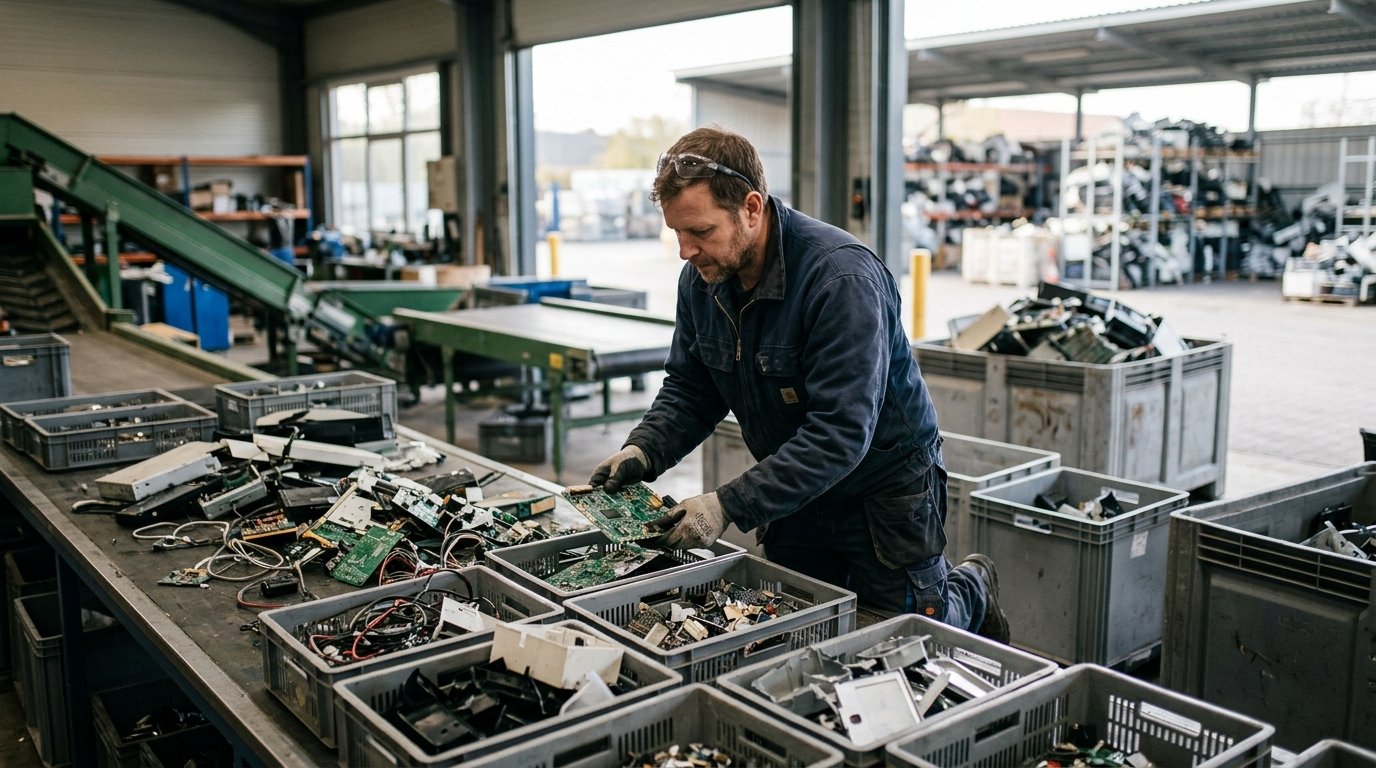
How does WMW | Circular economy: Electronic waste)) as a key to Europe's supply chain security impact the electronics recycling industry? WMW's recent article highlights how increasing electronic waste recycling can bolster European supply chains by recovering valuable materials and reducing reliance on imports. WMW | Circular economy: Electronic waste as a key to Europe’s supply chain security - Waste Management World With global e-waste projected at 62 million tonnes per year (UN Global E-Waste Monitor 2024), efficient recycling practices are important for resource sustainability.
The piece emphasizes that only 22.3% of e-waste is formally recycled worldwide, highlighting the urgent need to improve collection and processing systems. By improving these rates, Europe aims to secure its supply chains against volatile global markets and geopolitical tensions.
According to the Shift Project, manufacturing a new smartphone produces 50-80kg of co2 equivalent.
What role does urban mining play in securing European electronics supply chains?
Urban mining plays a key role by extracting valuable materials from discarded electronics, much like traditional mining but without environmental degradation. For instance, 1 million smartphones can contain up to 35kg of gold (UN Global E-Waste Monitor 2024), highlighting the immense value locked in electronic waste.
This practice not only provides economic benefits but also reduces the need for new resource extraction and lowers carbon footprints compared to virgin material sourcing. As Europe moves towards a circular economy, urban mining will become increasingly important for meeting raw material demands sustainably.
According to the World Economic Forum, e-waste is the fastest-growing waste stream globally.
How does planned obsolescence affect electronics recycling efforts?
Planned obsolescence hinders effective electronics recycling by reducing product lifespans and encouraging premature disposal. This strategy forces consumers into constant upgrade cycles, generating more waste faster than it can be recycled efficiently (eCycling Central).
Regulations like the WEEE Directive in Europe aim to combat this issue by promoting longer-lasting products and better repair options. However, widespread adoption of planned obsolescence complicates these efforts, necessitating stronger consumer awareness and legal frameworks.
According to the Apple Environmental Report 2024, apple recovered over 1 tonne of gold from recycled devices in 2023.
How does the right-to-repair movement intersect with electronic waste recycling?
The right-to-repair movement significantly intersects with e-waste recycling by advocating for easier access to product repair information and spare parts. This initiative aims to extend product lifespans and reduce the volume of discarded devices (eCycling Central).
In May 2026, several EU member states are expected to implement stricter right-to-repair regulations, aligning with the European Commission's goal to make all electronics repairable for at least ten years. At WMW | Circular economy: Electronic waste as a key to Europe’s supply chain security - Waste Management World, such moves will likely increase recycling efficiency by reducing premature waste generation.
What's the current status of e-waste regulation in Europe?
European Union's WEEE Directive sets ambitious targets for electronic waste collection and treatment. Currently, EU member states are required to collect 65% of all electrical and electronic equipment placed on the market (WEEE Directive).
As of May 2024, many countries fall short of this goal, indicating ongoing challenges in achieving full compliance. However, improvements are being made through increased awareness campaigns and technological advancements in recycling infrastructure.
What steps can consumers take to support responsible electronics recycling?
Consumers play a important role in supporting responsible e-waste management by properly disposing of old devices and choosing certified recyclers (eCycling Central). They should also consider extending product life through repair or upcycling options, reducing the need for new purchases.
To find nearby certified facilities, people can use directories like those provided on ecyclingcentral.com. Additionally, staying informed about local regulations and participating in community recycling drives helps build a more sustainable future for e-waste management.
Sources
- Shift Project
- World Economic Forum
- Apple Environmental Report 2024
Background context + what to do next
Industry context
Regulatory frameworks for e-waste, hazardous materials, producer responsibility, and Right to Repair continue to expand globally through 2026. Enforcement actions have increased 30-60% across EU + UK + US since 2023 - what was historically a low-risk regulatory area is now actively prosecuted.
Related guides + tools
How this matters for you
If this story affects you as a consumer, business operator, or industry participant: review the related guides above for actionable next steps. Most of our tools are free + take 2-5 minutes to use.
For consumers: check whether your existing devices, appliances, or contracts are affected by the developments described. Use our Recycling Locator for compliant local disposal + our Trade-In Best Price Finder for cash recovery.
For businesses: consider whether your decommissioning + compliance practices need updating. Our B2B ITAD Quote Service matches you to 3 vetted providers in 1 business day at no cost.
For regulators + policy researchers: see our E-Waste Fines Checker for cross-jurisdictional penalty comparison, and our Right to Repair Tracker for legislation status by country/state.
Sources + verification
This article synthesises information from multiple authoritative sources including: industry trade press, regulatory authority publications, peer-reviewed research, and primary corporate disclosures. Where specific claims are made, they reflect the most recent data available at the time of publication (2026-05-20).
For deep-dive on any specific aspect, consult: official regulatory authority sites (EPA in US, Defra in UK, European Commission in EU), industry trade bodies (CESA, BIR, R2 Solutions), and major recycling industry research (Eunomia, Pyramid, BloombergNEF).
---
eCycling Central news coverage focuses on developments affecting consumers, businesses, and policymakers in the electronics recycling + circular economy space. Operated by Defining Style Limited (UK Companies House 10572391, ICO Registration ZA711914). Content updated continuously - see news feed for latest.