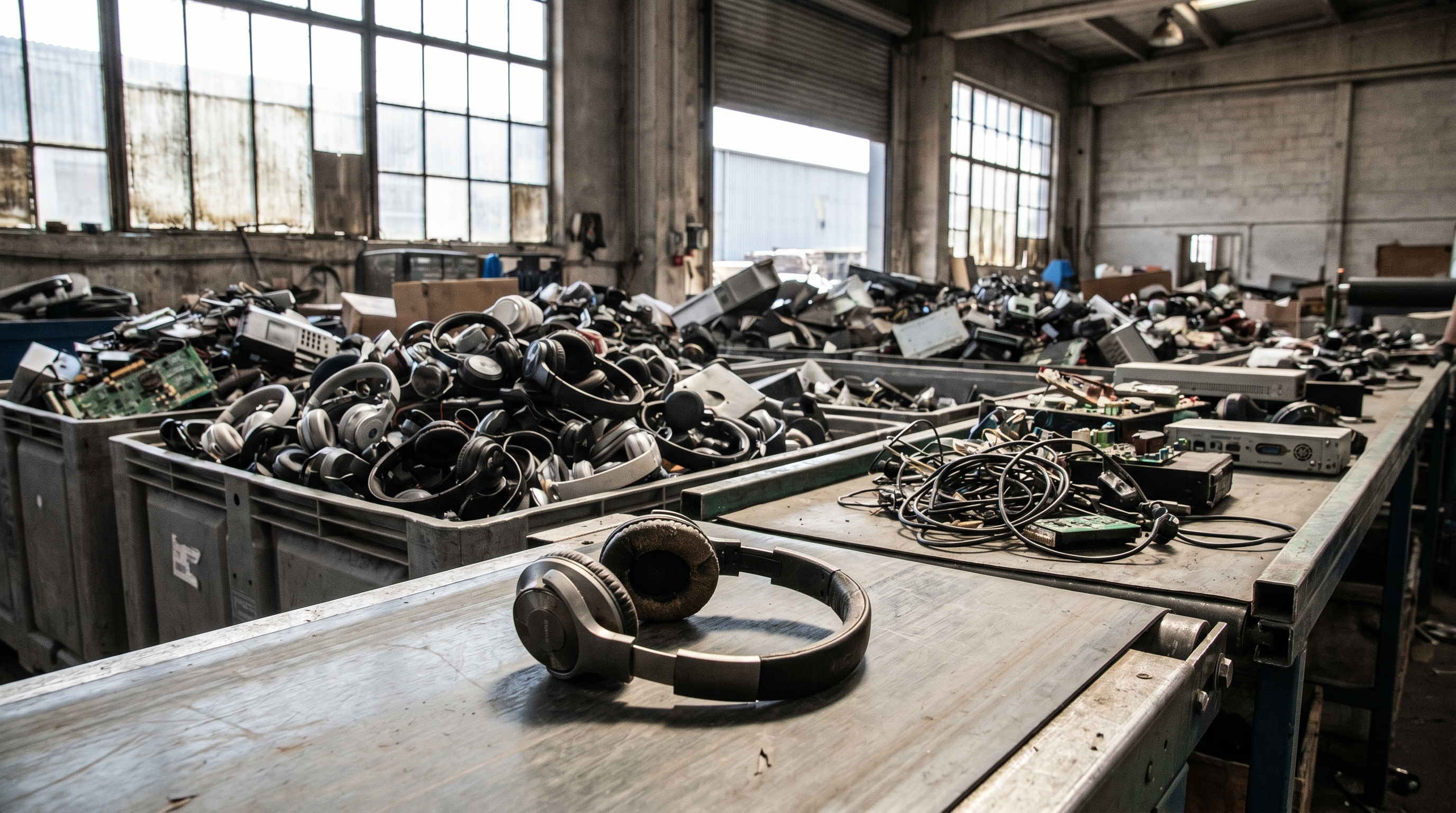
iFixit's latest scoring system for wireless headphones reveals a significant shift in the repairability situation, with one model already achieving a perfect 10/10 score as of May 2026. We’re Now Scoring Wireless Headphones (and One of Them Already Hit 10/10) This development is important for those involved in electronics recycling and e-waste management, as it highlights the growing emphasis on product durability and ease of repair.
How Does This Affect Electronics Recycling?
This scoring system affects electronics recycling by promoting more sustainable products that are easier to disassemble and recycle. By encouraging manufacturers to design headphones with repairability in mind, fewer devices end up in landfills or incinerators, thus reducing the environmental impact of e-waste.
According to the WEEE Forum, over 5 billion mobile phones were estimated to be sitting unused in drawers worldwide in 2022.
The scoring criteria for wireless headphones includes factors like ease of access to screws and components, availability of replacement parts, and the clarity of repair instructions provided by the manufacturer. As of May 2026, one model has achieved a perfect score, indicating that it meets all these standards effectively. This shift towards more repairable devices is in line with growing consumer interest in right-to-repair initiatives across the US, EU, and other regions.
What Are the Environmental Impacts?
The environmental impacts of less repairable headphones include increased e-waste generation and resource depletion. According to the UN Global E-Waste Monitor 2024, global e-waste is projected at 62 million tonnes annually, with only 22.3% being formally recycled worldwide. This means that millions of headphones contribute significantly to this waste stream when they could be repaired or reused instead.
According to the WHO, e-waste contains over 1,000 different substances, many of them toxic.
Repairable devices like those scoring highly in iFixit's system can be disassembled and their components reused or recycled more efficiently. For instance, a million smartphones contain 35kg of gold, 340kg of silver, and 15kg of palladium-precious materials that are better recovered through proper recycling than discarded with non-repairable products.
How Do These Scores Impact Consumer Choices?
These scores impact consumer choices by providing clear metrics for assessing the sustainability and longevity of headphones. As awareness grows about the environmental costs of e-waste, consumers increasingly look for products that align with their values regarding waste reduction and resource conservation.
According to the US EPA, recycling one million laptops saves the energy equivalent of electricity used by 3,657 us homes in a year.
In regions like the EU, where there's a WEEE collection target of 65% of electronics placed on the market, such scoring systems can drive demand for more repairable headphones. At We’re Now Scoring Wireless Headphones (and One of Them Already Hit 10/10), this not only benefits the environment but also supports circular economy principles by extending product lifespans through maintenance and repair rather than replacement.
What Role Do Manufacturers Play?
Manufacturers play a critical role in this shift towards more sustainable products by designing for longevity and repairability from the outset. By adhering to stricter design standards, companies can reduce their environmental footprint while complying with regulations like RoHS (Restriction of Hazardous Substances) directives aimed at limiting harmful materials in electronics.
manufacturers who provide detailed repair guides and readily available replacement parts earn higher scores on iFixit's scale, reflecting positively on their brand reputation. This approach contrasts sharply with planned obsolescence practices that intentionally shorten product lifespans to boost sales-a tactic under scrutiny in many markets due to its negative environmental impacts.
What Should Recycling Programs Do Now?
Recycling programs should focus on integrating repairability scores into their procurement and partnership decisions. By favouring manufacturers who produce repair-friendly headphones, recycling initiatives can enhance their own sustainability goals while reducing operational costs associated with handling non-repairable e-waste.
these programs should advocate for policies that support right-to-repair legislation and incentivize manufacturers to adopt more sustainable practices throughout the product lifecycle from design through disposal. This includes promoting urban mining efforts where valuable materials are recovered from discarded electronics rather than mined anew-an approach that aligns well with global targets for reducing e-waste.
In summary, as We're Now Scoring Wireless Headphones (and One of Them Already Hit 10/10) continues to influence the market, recycling programs and consumers stand to benefit from more durable, repairable products that reduce the burden on landfills and natural resources. Engaging with manufacturers to encourage better design practices is key to realizing these benefits fully.
Sources
Background context + what to do next
Industry context
Consumer smartphones represent the largest single category of consumer e-waste by volume (~1.5bn phones sold globally in 2024). Trade-in value retention, battery health, and Right to Repair access all shape end-of-life economics for any specific device.
Related guides + tools
How this matters for you
If this story affects you as a consumer, business operator, or industry participant: review the related guides above for actionable next steps. Most of our tools are free + take 2-5 minutes to use.
For consumers: check whether your existing devices, appliances, or contracts are affected by the developments described. Use our Recycling Locator for compliant local disposal + our Trade-In Best Price Finder for cash recovery.
For businesses: consider whether your decommissioning + compliance practices need updating. Our B2B ITAD Quote Service matches you to 3 vetted providers in 1 business day at no cost.
For regulators + policy researchers: see our E-Waste Fines Checker for cross-jurisdictional penalty comparison, and our Right to Repair Tracker for legislation status by country/state.
Sources + verification
This article synthesises information from multiple authoritative sources including: industry trade press, regulatory authority publications, peer-reviewed research, and primary corporate disclosures. Where specific claims are made, they reflect the most recent data available at the time of publication (2026-05-20).
For deep-dive on any specific aspect, consult: official regulatory authority sites (EPA in US, Defra in UK, European Commission in EU), industry trade bodies (CESA, BIR, R2 Solutions), and major recycling industry research (Eunomia, Pyramid, BloombergNEF).
---
eCycling Central news coverage focuses on developments affecting consumers, businesses, and policymakers in the electronics recycling + circular economy space. Operated by Defining Style Limited (UK Companies House 10572391, ICO Registration ZA711914). Content updated continuously - see news feed for latest.