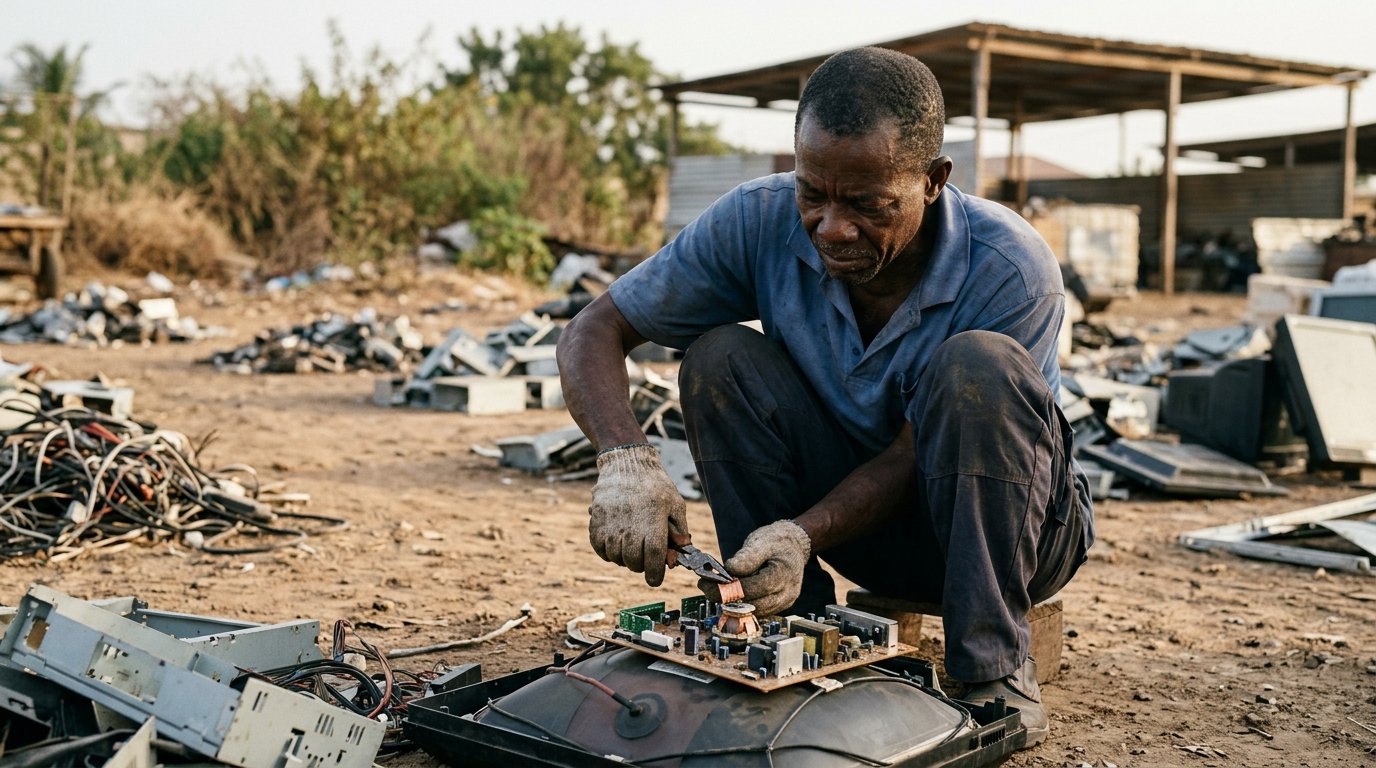
The informal paradox: electronic waste and the toxic circular economy in Ghana highlights a critical issue within global e-waste management, revealing that informal recycling practices often lead to environmental harm despite efforts to formalize processes. The informal paradox: electronic waste and the toxic circular economy in Ghana - Nature This study highlights the need for better regulation and support for sustainable recycling methods.
What Happens When Informal Recycling Practices Go Wrong?
Informal recycling practices can lead to significant environmental damage due to improper handling of hazardous materials. For example, in Ghana, where approximately 150,000 tonnes of e-waste are imported annually, informal recyclers often expose themselves and the environment to toxic substances like mercury and lead.
The lack of proper regulations means that many e-waste items end up being burned or dumped, releasing harmful chemicals into the air and soil. According to the UN Global E-Waste Monitor 2024, only 22.3% of global e-waste is formally recycled each year, leaving a large portion to be handled by informal sectors.
According to the Apple Environmental Report 2024, apple recovered over 1 tonne of gold from recycled devices in 2023.
How Does This Affect Electronics Recycling?
This paradox affects electronics recycling because it shows that while formal systems aim for safer and more efficient recycling methods, the reality on the ground often falls short due to inadequate regulation and infrastructure. In Ghana, only around 20% of e-waste is managed through formal channels, highlighting the gap between regulations and actual practices.
For instance, informal recyclers in Ghana face significant health risks without proper protective equipment or knowledge about handling hazardous materials safely. This not only endangers their lives but also leads to environmental contamination that affects broader communities.
What Are The Financial Implications Of E-Waste Recycling?
The financial implications are substantial for both the economy and public health. Improper recycling practices can lead to increased medical costs due to exposure to toxic substances, such as lead poisoning or respiratory issues from burning e-waste. In addition, the loss of valuable resources like gold, silver, and palladium that could be recovered through proper recycling is estimated at over $50 billion annually globally.
while informal recyclers may save on operational costs by avoiding formal processes, these savings come at a high social cost. The informal paradox exposes the need for better economic incentives to encourage formal recycling practices, such as tax breaks or subsidies for certified facilities.
What Can Be Done To Improve E-Waste Management?
To address this issue, governments and international bodies must collaborate more closely on implementing strict yet practical regulations that support both environmental sustainability and economic viability. Initiatives like the
Basel Convention can help control hazardous waste movements between countries, preventing informal imports of e-waste into developing nations.
promoting awareness about the value of e-waste recycling through education programs can encourage manufacturers to design products with easier recyclability in mind-this ties directly into concepts like [planned obsolescence](/glossary/planned-obsolescence) and [urban mining](/glossary/urban-mining).
According to the BankMyCell 2024, iPhones retain trade-in value better than Android phones, losing ~40% in year 1 vs ~55%.
What Should Businesses Do Now?
Businesses should invest in more sustainable practices by supporting certified recycling facilities rather than informal operations. This not only helps mitigate environmental risks but also contributes to the circular economy, as recovering valuable materials reduces production costs for new products.
companies can advocate for stronger legislation and participate in initiatives aimed at improving e-waste management standards globally. By doing so, businesses can set a positive example and drive industry-wide change towards more responsible recycling practices.
By addressing these issues now, we can work towards a future where e-waste is managed responsibly, protecting both the environment and public health while maximizing economic benefits through sustainable resource recovery.
According to the Royal Society of Chemistry, mobile phones contain up to 60 different elements, including critical raw materials.
Sources
- Apple Environmental Report 2024
- BankMyCell 2024
- Royal Society of Chemistry