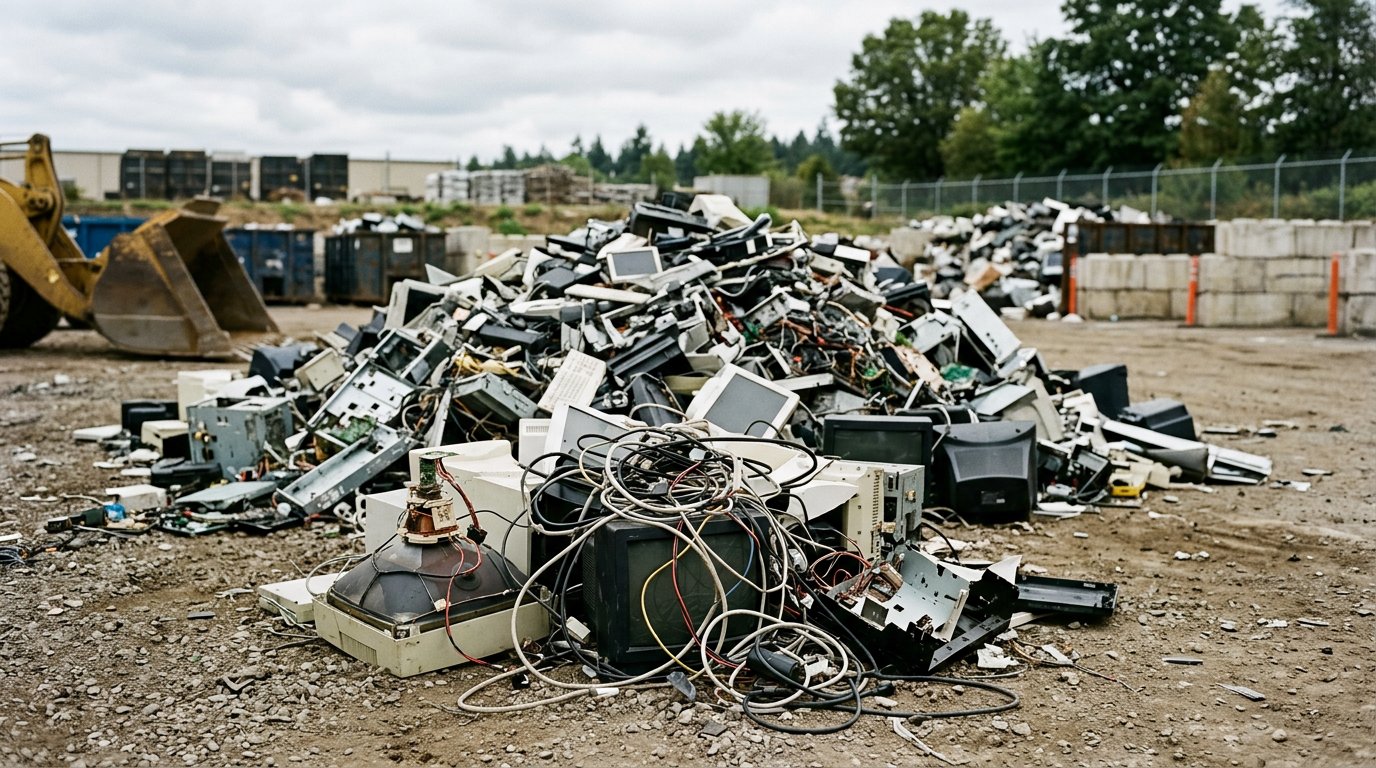
The UK Department for Environment, Food & Rural Affairs (DEFRA) announced new reforms to stop waste criminals from exploiting loopholes in the system as of May 2026. These changes aim to make it harder for unscrupulous operators to mismanage electronic waste) and other hazardous materials.
What Are New Reforms to Stop Waste Criminals From Exploiting Loopholes?
New reforms to stop waste criminals from exploiting loopholes introduce stricter background checks for waste carriers, ensuring that only reputable companies can handle e-waste. This move is important as the amount of global e-waste reached 62 million tonnes in 2024, with only 22.3% formally recycled worldwide.
According to the WHO, e-waste contains over 1,000 different substances, many of them toxic.
These new reforms target unlicensed carriers who often exploit legal loopholes to avoid proper disposal and recycling practices. By requiring all waste carriers to undergo background checks-similar to those for financial institutions and other high-risk sectors-the government hopes to weed out criminals engaged in illegal dumping or exporting e-waste to developing countries where it's more likely to end up in informal, unregulated recycling facilities.
How Does This Affect Electronics Recycling?
New reforms to stop waste criminals from exploiting loopholes will directly impact electronics recycling by ensuring that only licensed and trustworthy carriers can transport electronic waste. The stricter background checks mean that companies handling e-waste must now meet stringent criteria, reducing the risk of improper disposal practices such as illegal dumping or exporting hazardous materials.
According to the US EPA, recycling one million laptops saves the energy equivalent of electricity used by 3,657 us homes in a year.
For consumers and businesses looking to recycle their old devices responsibly, these reforms provide greater assurance about where their electronics end up. With an estimated 1 million phones containing around 35kg of gold, 340kg of silver, and 15kg of palladium, proper handling is critical for both environmental and economic reasons.
What Are the Key Changes in Waste Management Regulations?
New reforms to stop waste criminals from exploiting loopholes include several key changes. Starting May 2026, all waste carriers must pass rigorous background checks before obtaining a license. This process includes verifying criminal records and financial stability, much like how banks vet potential customers.
According to the UN Global E-Waste Monitor 2024, only 22.3% of e-waste was properly collected and recycled in 2022.
carriers will need to demonstrate adherence to environmental laws such as the WEEE Directive in Europe and the Basel Convention globally. These changes aim to cut down on illegal activities like dumping e-waste in landfills or shipping it to developing nations without proper documentation.
How Can Consumers Ensure Their Electronics Are Recycled Responsibly?
To ensure that electronics are recycled responsibly, consumers should look for certified recycling centers that comply with the new reforms and other relevant regulations. In the US, businesses can use the EPA's eCycling list to find reputable recyclers. In Europe, adhering to WEEE guidelines is key.
Consumers also benefit from understanding their rights under local waste management laws and knowing how to report suspicious activities related to e-waste disposal. By choosing certified recycling facilities, individuals contribute to reducing environmental harm and supporting the circular economy's goal of maximizing resource recovery.
What Should Businesses Do Now?
Businesses should review their current waste carriers against new requirements introduced by New reforms to stop waste criminals from exploiting loopholes. Companies need to ensure that all e-waste handling partners have undergone rigorous background checks and meet stringent licensing criteria. This shift helps protect both the environment and corporate reputation while adhering to legal standards.
For those seeking guidance on how best to manage electronic waste, consulting resources like the [right-to-repair](/guides/right-to-repair-what-it-means) initiatives or exploring options for urban mining can provide valuable insights into sustainable practices. Engaging with certified recycling partners and staying informed about evolving regulations will be important moving forward.
What Are Upcoming Regulations to Watch Out For?
Upcoming regulations to watch include the EU's push towards higher WEEE collection targets, aiming for 65% of electronics placed on market by 2030. This builds upon existing efforts like RoHS and the Basel Convention to further reduce harmful impacts from electronic waste.
Businesses should also keep an eye out for advancements in lithium battery recycling as the market grows, expected to reach 2.5 TWh by 2030. Such trends highlight the importance of proactive compliance with new reforms aimed at curbing illegal activities and promoting responsible e-waste management practices globally.
Sources
- WHO
- US EPA
- UN Global E-Waste Monitor 2024
Background context + what to do next
Industry context
The global electronics + sustainability sector continues to evolve rapidly through 2026 - regulatory tightening, consumer awareness, and corporate Net Zero commitments all driving change.
Related guides + tools
How this matters for you
If this story affects you as a consumer, business operator, or industry participant: review the related guides above for actionable next steps. Most of our tools are free + take 2-5 minutes to use.
For consumers: check whether your existing devices, appliances, or contracts are affected by the developments described. Use our Recycling Locator for compliant local disposal + our Trade-In Best Price Finder for cash recovery.
For businesses: consider whether your decommissioning + compliance practices need updating. Our B2B ITAD Quote Service matches you to 3 vetted providers in 1 business day at no cost.
For regulators + policy researchers: see our E-Waste Fines Checker for cross-jurisdictional penalty comparison, and our Right to Repair Tracker for legislation status by country/state.
Sources + verification
This article synthesises information from multiple authoritative sources including: industry trade press, regulatory authority publications, peer-reviewed research, and primary corporate disclosures. Where specific claims are made, they reflect the most recent data available at the time of publication (2026-05-20).
For deep-dive on any specific aspect, consult: official regulatory authority sites (EPA in US, Defra in UK, European Commission in EU), industry trade bodies (CESA, BIR, R2 Solutions), and major recycling industry research (Eunomia, Pyramid, BloombergNEF).
---
eCycling Central news coverage focuses on developments affecting consumers, businesses, and policymakers in the electronics recycling + circular economy space. Operated by Defining Style Limited (UK Companies House 10572391, ICO Registration ZA711914). Content updated continuously - see news feed for latest.