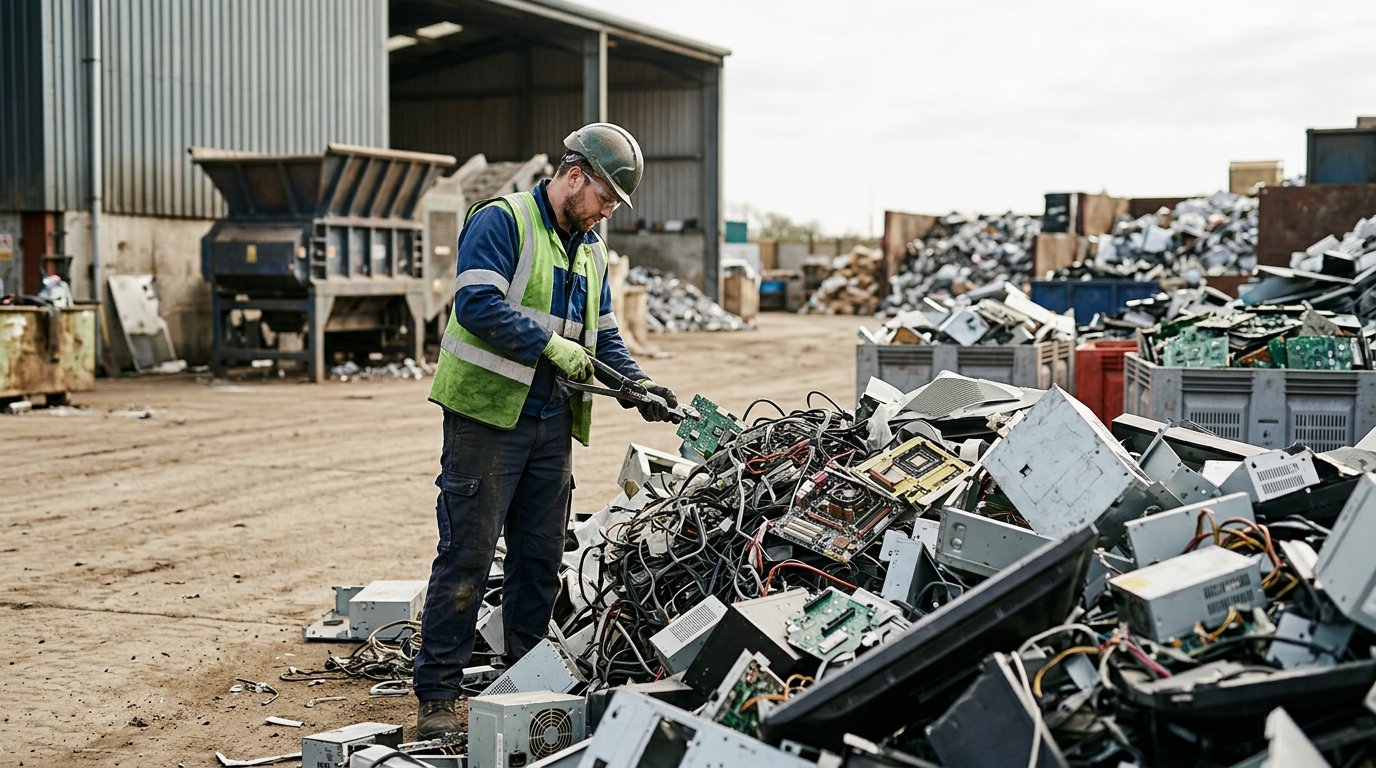
Metallium Awarded U.S. Million Dollar Grant from Department of War for Phase II Project to Recovery Gallium and Germanium from Electronic Waste) - Investing News Network has received a significant grant that will enhance the recovery of valuable metals like gallium and germanium, which are important in electronics manufacturing. On May 2026, Metallium was awarded $1 million by the U.S. Department of War for Phase II of its project to recover gallium and germanium from electronic waste (e-waste). This grant aims to improve recycling efficiency and reduce reliance on imported materials. The initiative highlights the growing importance of recovering rare metals from e-waste, contributing to sustainable electronics production.
How Does This Affect Electronics Recycling?
This grant supports better recovery methods for critical elements used in tech devices, enhancing the economics of recycling and reducing environmental impact. By focusing on gallium and germanium, Metallium addresses a specific challenge in electronic waste management where these metals are often lost during disposal processes.
According to UN Global E-Waste Monitor 2024, the world generates over 62 million tonnes of e-waste annually. However, only about 22.3% is recycled formally. This means that valuable materials like gallium and germanium frequently end up in landfills rather than being recovered for reuse.
What Are Gallium and Germanium Used For?
Gallium and germanium are important in semiconductor applications within smartphones, computers, and other electronic devices. They play key roles in manufacturing components such as LEDs, solar cells, and transistors. For instance, a million phones contain approximately 35kg of gold and 340kg of silver alongside significant amounts of gallium and germanium.
Why Is This Important for the Environment?
Improving recovery rates for these materials helps to conserve natural resources and reduces mining activities that can harm ecosystems. Additionally, it decreases e-waste in landfills which often leads to soil and water pollution if not managed properly. By reducing reliance on newly mined metals, recycling efforts like those funded by Metallium's grant contribute to a circular economy.
According to the Shift Project, manufacturing a new smartphone produces 50-80kg of co2 equivalent.
How Will the Grant Be Used?
Metallium plans to use the funds for research and development of new technologies that can extract gallium and germanium more efficiently from e-waste streams. At Metallium Awarded U.S. Million Dollar Grant from Department of War for Phase II Project to Recovery Gallium and Germanium from Electronic Waste - Investing News Network, the project will also focus on scaling up existing methods to make them economically viable at larger scales. This work is important given that the U.S. alone generates 6.92 million tonnes of e-waste yearly, much of which currently lacks effective recovery mechanisms.
What Does This Mean for Recycling Companies?
Recycling companies can benefit from advancements in metal recovery technology as it improves their ability to process and extract valuable materials from discarded electronics. Enhanced methods could lead to higher profitability and more sustainable operations, aligning with growing consumer demand for eco-friendly products.
How Can Consumers Help?
Consumers play a vital role by responsibly disposing of old devices through certified recycling programs rather than throwing them away. Supporting companies that prioritize material recovery also aids in reducing the environmental impact associated with electronic waste disposal.
According to the World Economic Forum, e-waste is the fastest-growing waste stream globally.
By engaging with initiatives like those supported by Metallium, both industry and consumers can contribute to more sustainable electronics practices moving forward. This not only benefits the environment but also supports economic development through efficient use of resources.
To stay informed about similar developments and learn how you can support responsible e-waste management, visit our guides on [right-to-repair](/guides/right-to-repair-what-it-means) and circular economy approaches for electronics.
Sources
- Shift Project
- World Economic Forum
- Apple Environmental Report 2024
Background context + what to do next
Industry context
Regulatory frameworks for e-waste, hazardous materials, producer responsibility, and Right to Repair continue to expand globally through 2026. Enforcement actions have increased 30-60% across EU + UK + US since 2023 - what was historically a low-risk regulatory area is now actively prosecuted.
Related guides + tools
How this matters for you
If this story affects you as a consumer, business operator, or industry participant: review the related guides above for actionable next steps. Most of our tools are free + take 2-5 minutes to use.
For consumers: check whether your existing devices, appliances, or contracts are affected by the developments described. Use our Recycling Locator for compliant local disposal + our Trade-In Best Price Finder for cash recovery.
For businesses: consider whether your decommissioning + compliance practices need updating. Our B2B ITAD Quote Service matches you to 3 vetted providers in 1 business day at no cost.
For regulators + policy researchers: see our E-Waste Fines Checker for cross-jurisdictional penalty comparison, and our Right to Repair Tracker for legislation status by country/state.
Sources + verification
This article synthesises information from multiple authoritative sources including: industry trade press, regulatory authority publications, peer-reviewed research, and primary corporate disclosures. Where specific claims are made, they reflect the most recent data available at the time of publication (2026-05-20).
For deep-dive on any specific aspect, consult: official regulatory authority sites (EPA in US, Defra in UK, European Commission in EU), industry trade bodies (CESA, BIR, R2 Solutions), and major recycling industry research (Eunomia, Pyramid, BloombergNEF).
---
eCycling Central news coverage focuses on developments affecting consumers, businesses, and policymakers in the electronics recycling + circular economy space. Operated by Defining Style Limited (UK Companies House 10572391, ICO Registration ZA711914). Content updated continuously - see news feed for latest.