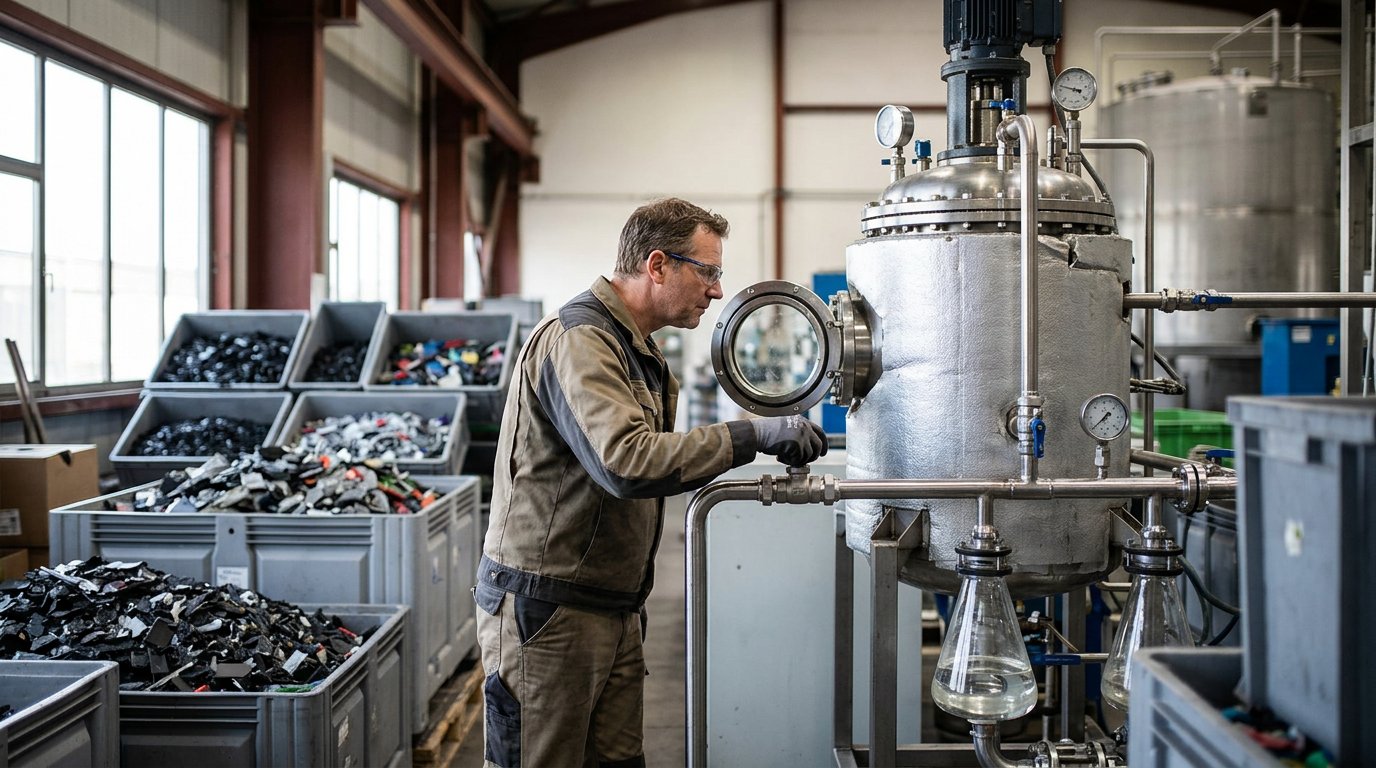
How depolymerisation could enable infinite reuse of plastics and the circular economy. How depolymerisation could enable infinite reuse of plastics and the circular economy - Chemistry World As discussed in Chemistry World, highlights a new approach to recycling that could drastically reduce waste from electronics. This process breaks down polymers into their constituent monomers. Allowing for the creation of high-quality recycled materials without losing integrity over multiple cycles. As electronic devices often contain significant amounts of plastic components. This development has direct implications for how we handle and recycle e-waste.
How Does This Affect Electronics Recycling?
This technology could significantly increase the efficiency and effectiveness of recycling electronics by enabling better handling of plastic components. With 62 million tonnes of global e-waste produced annually, according to the UN Global E-Waste Monitor 2024, finding ways to recycle plastics more effectively is important.
According to the UN Global E-Waste Monitor 2024, The value of raw materials in global e-waste was estimated at $91 billion in 2022.
Depolymerisation offers a cleaner method compared to mechanical recycling because it reduces contamination and allows for higher-quality output. By ensuring that plastic materials maintain their properties after multiple cycles of use and reuse. Manufacturers can rely on recycled material as they would virgin polymers. This means less need for new raw materials in the production of electronics, contributing directly to more sustainable manufacturing practices.
What Are the Environmental Benefits?
The environmental benefits are substantial since depolymerisation reduces reliance on fossil fuels and decreases landfill waste. By focusing on infinite reuse rather than single-use plastics. This process helps in minimizing carbon footprints associated with plastic production and disposal. For instance, an average smartphone contains over 60 different elements, making recycling complex but also highlighting the importance of technologies like depolymerisation.
According to the Shift Project, manufacturing a new smartphone produces 50-80kg of co2 equivalent.
What Are the Legal and Regulatory Implications?
Regulations such as the EU WEEE Directive aim to improve e-waste management through higher collection targets-currently set at 65% of electronics placed on the market. Innovations in recycling technology, including depolymerisation, could help countries meet these ambitious goals more effectively. As regulations become stricter and consumers demand better environmental stewardship from manufacturers, technologies like depolymerisation will play a key role.
How Can Consumers Participate?
Consumers can participate by supporting companies that adopt sustainable practices and advocate for policies promoting circular economy principles. For instance, the right to repair-what-it-means) movement encourages manufacturers to design products with recycling in mind. By demanding better recycling infrastructure and supporting initiatives aimed at reducing e-waste, consumers contribute to a more sustainable future.
What Should Businesses Do?
Businesses should invest in research and development of advanced recycling technologies like depolymerisation. At How depolymerisation could enable infinite reuse of plastics and the circular economy - Chemistry World, they can also partner with established recyclers who have the capacity to implement these processes on an industrial scale. Additionally, businesses need to design products for disassembly and material recovery from the outset, adhering strictly to regulations such as RoHS (Restriction of Hazardous Substances Directive) and WEEE.
According to the World Economic Forum, e-waste is the fastest-growing waste stream globally.
What Are Future Trends?
Looking ahead, we can expect increased investment in circular economy models across industries. As lithium-ion battery markets expand-projected to reach 2.5 TWh by 2030-the challenge of recycling these batteries sustainably becomes even more critical. Innovations like depolymerisation will be vital for managing the growing volume of e-waste responsibly.
What Can We Do Now?
To start making a difference now, consumers and businesses alike can:
- Support initiatives promoting sustainable electronics design.
- Advocate for stronger regulations on e-waste management.
- Use resources like our guide to [right-to-repair](/guides/right-to-repair-what-it-means) to ensure fair access to repair services.
- Learn about the importance of urban mining and how it can recover valuable materials from discarded electronics.
By taking proactive steps today, we set a precedent for sustainable practices tomorrow.
Sources
- UN Global E-Waste Monitor 2024
- Shift Project
- World Economic Forum