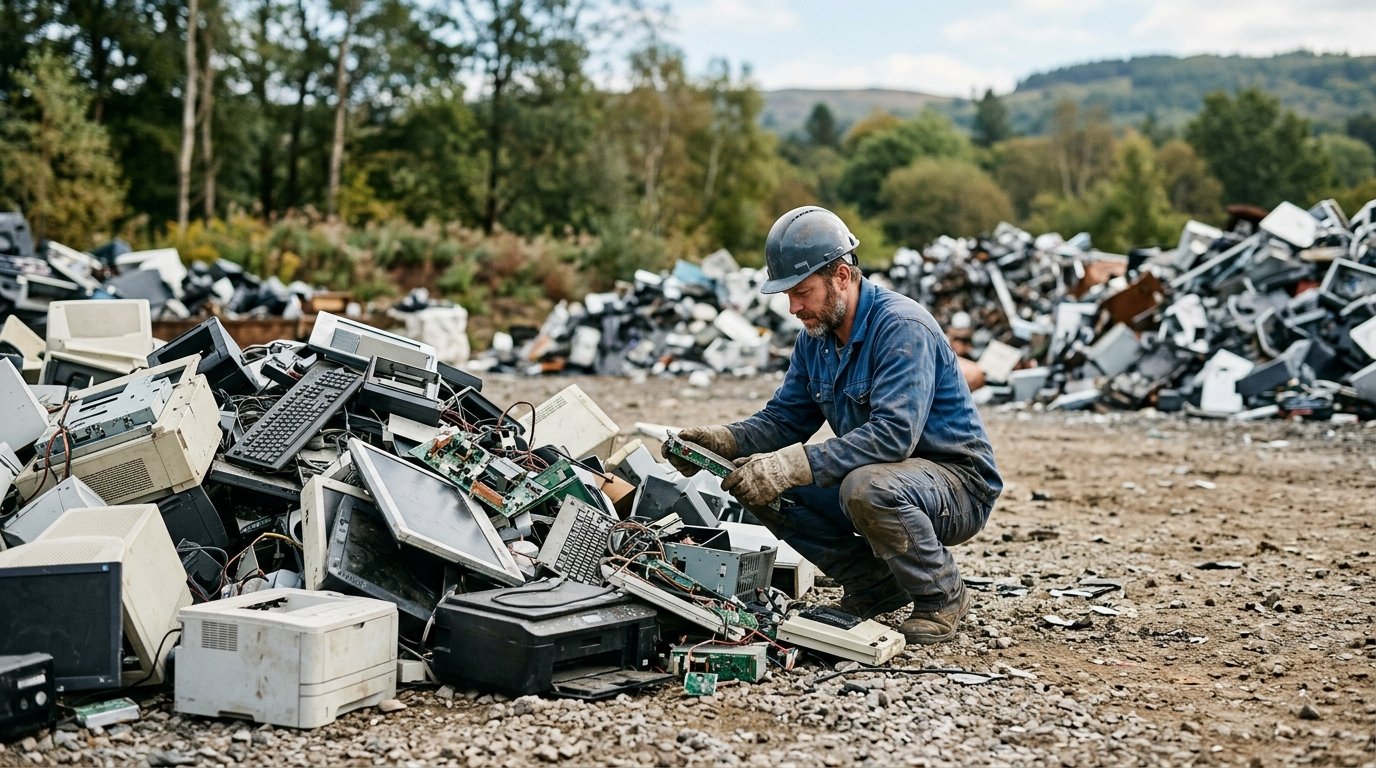
Why do we need to rethink how electronics are designed and recycled? According to Electronics' Circular Problem: Why What We Build Matters as Much as What We Recycle, published by Impakter in May 2026, the way electronics are built has a significant impact on their recyclability. Electronics’ Circular Problem: Why What We Build Matters as Much as What We Recycle - Impakter This issue is important for everyone involved in electronics recycling or concerned about e-waste.
How Does This Affect Electronics Recycling?
Electronics' Circular Problem highlights that only 22.3% of global e-waste was formally recycled in 2024, according to the UN Global E-Waste Monitor. As more devices contain valuable materials like gold and silver, recycling rates becoming even lower means wasted opportunities for resource recovery.
The design of electronics plays a major role in their recyclability. For example, smartphones often contain over 60 different elements, making disassembly complicated and costly. To improve this situation, manufacturers should focus on designing products that are easier to take apart and recycle. This wouldn't only reduce the environmental impact but also increase the economic viability of recycling operations.
According to the WHO, e-waste contains over 1,000 different substances, many of them toxic.
Planned obsolescence, a practice where products are deliberately designed with limited lifespans, directly affects how long electronics remain in use before becoming waste. According to the article, this design strategy reduces the lifespan of devices and increases e-waste generation rates. In May 2026, Electronics' Circular Problem called for stricter regulations on planned obsolescence to extend product life cycles.
For instance, if a phone is designed to last only two years rather than five, it contributes more significantly to the global e-waste problem. The EU's WEEE Directive aims to address this by setting collection targets like 65% of electronics placed on the market, but such measures need to be complemented with design standards that discourage planned obsolescence.
Urban mining refers to the process of recovering valuable metals and materials from discarded electronic devices. As outlined in Electronics' Circular Problem, urban mining can recover substantial amounts of
rare earth elements and precious metals from e-waste. This practice not only helps conserve natural resources but also reduces environmental pollution associated with traditional mining.
For example, one million smartphones contain 35 kilograms of gold, 340 kilograms of silver, and 15 kilograms of palladium. By enhancing the recyclability of these devices through better design practices, urban mining can become more efficient and profitable. This approach supports a circular economy where materials are reused rather than discarded.
What Are the Economic Implications?
The economic implications of poor electronics recycling rates are significant. With over 62 million tonnes of e-waste generated globally each year, the potential value in recovered metals is immense. However, inefficient recycling methods mean much of this value goes unrealized.
For instance, a single smartphone might contain more than $10 worth of gold and other precious metals. If these devices were designed for better recyclability. It could lead to substantial cost savings for both manufacturers and consumers alike. Improved design practices can reduce the costs associated with disassembly and processing, making recycling more economically viable.
According to the US EPA, recycling one million laptops saves the energy equivalent of electricity used by 3,657 us homes in a year.
What Can We Do Now?
To address the challenges highlighted in Electronics' Circular Problem, several actions can be taken immediately:
- Support Right-to-Repair Initiatives: By advocating for policies that allow consumers to repair their devices easily, you reduce waste from premature disposal.
- Promote Design for Disassembly: Encourage manufacturers to design products with recycling and disassembly in mind.
- Increase Awareness About Urban Mining: Educate the public on the economic benefits of recovering materials from e-waste through urban mining practices.
By taking these steps, we can move towards a more sustainable future where electronics are designed not just for use but also for reuse and recycling.
According to the UN Global E-Waste Monitor 2024, only 22.3% of e-waste was properly collected and recycled in 2022.
Sources
- WHO
- US EPA
- UN Global E-Waste Monitor 2024
Background context + what to do next
Industry context
The global electronics + sustainability sector continues to evolve rapidly through 2026 - regulatory tightening, consumer awareness, and corporate Net Zero commitments all driving change.
Related guides + tools
How this matters for you
If this story affects you as a consumer, business operator, or industry participant: review the related guides above for actionable next steps. Most of our tools are free + take 2-5 minutes to use.
For consumers: check whether your existing devices, appliances, or contracts are affected by the developments described. Use our Recycling Locator for compliant local disposal + our Trade-In Best Price Finder for cash recovery.
For businesses: consider whether your decommissioning + compliance practices need updating. Our B2B ITAD Quote Service matches you to 3 vetted providers in 1 business day at no cost.
For regulators + policy researchers: see our E-Waste Fines Checker for cross-jurisdictional penalty comparison, and our Right to Repair Tracker for legislation status by country/state.
Sources + verification
This article synthesises information from multiple authoritative sources including: industry trade press, regulatory authority publications, peer-reviewed research, and primary corporate disclosures. Where specific claims are made, they reflect the most recent data available at the time of publication (2026-05-20).
For deep-dive on any specific aspect, consult: official regulatory authority sites (EPA in US, Defra in UK, European Commission in EU), industry trade bodies (CESA, BIR, R2 Solutions), and major recycling industry research (Eunomia, Pyramid, BloombergNEF).
---
eCycling Central news coverage focuses on developments affecting consumers, businesses, and policymakers in the electronics recycling + circular economy space. Operated by Defining Style Limited (UK Companies House 10572391, ICO Registration ZA711914). Content updated continuously - see news feed for latest.