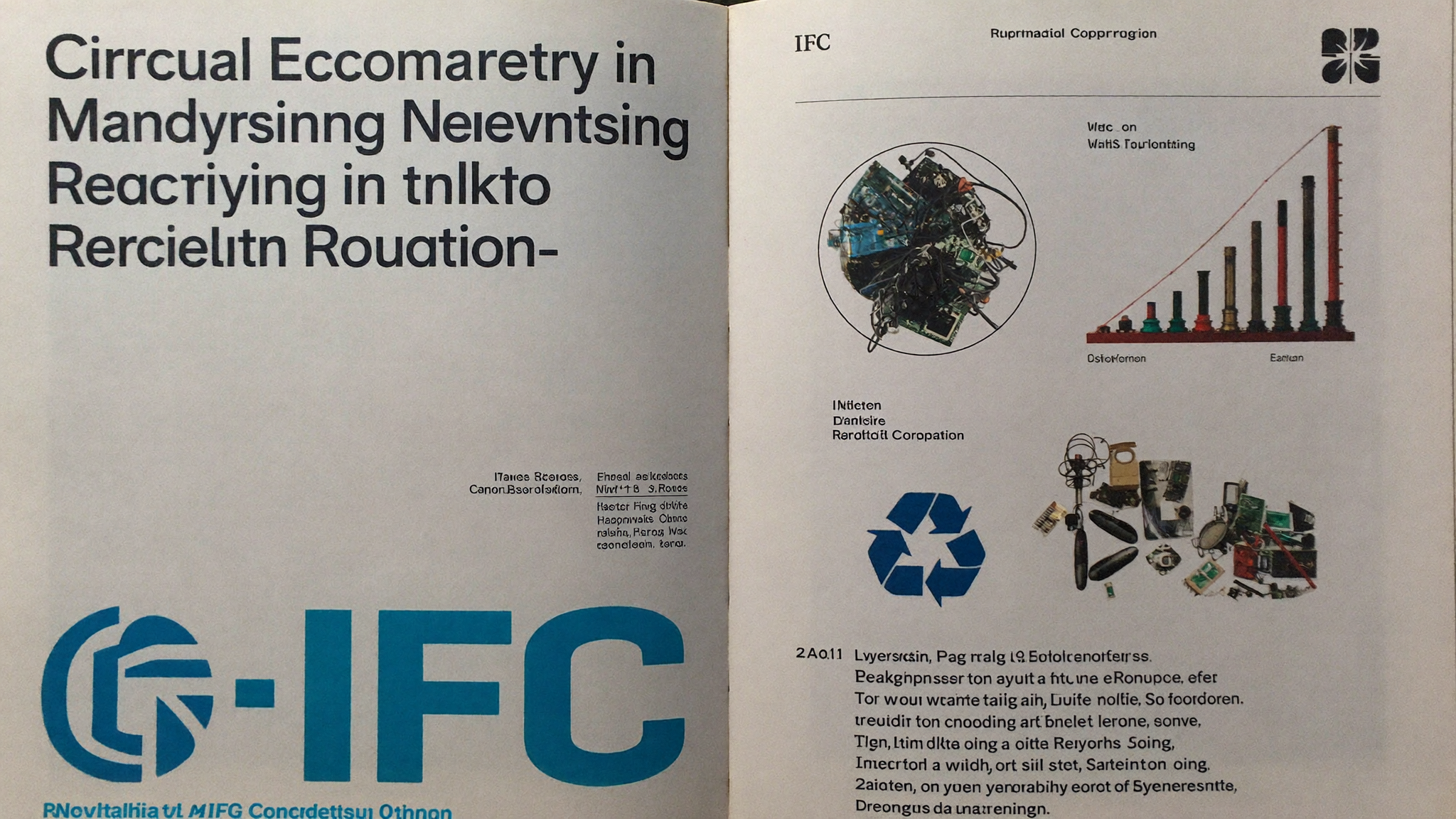
What happened and why it matters for people who recycle electronics or care about e-waste: The International Finance Corporation (IFC) recently launched a new initiative, Circular Economy in Manufacturing: Investing in Recycling and Waste Reduction, aiming to boost recycling efforts worldwide by providing financial support to businesses committed to sustainable manufacturing practices. Circular Economy in Manufacturing: Investing in Recycling and Waste Reduction - International Finance Corporation (IFC) This move is important because only 22.3% of global e-waste is formally recycled each year, leaving vast amounts of valuable materials unused and causing significant environmental harm.
How Does This Affect Electronics Recycling?
This initiative affects electronics recycling by offering funding and expertise to companies that aim to reduce waste and increase material recovery from discarded devices. With the global generation of e-waste expected to reach 62 million tonnes per year, according to the UN Global E-Waste Monitor 2024, such support is vital for scaling up responsible recycling practices globally.
One key challenge in electronics recycling is extracting valuable materials efficiently and safely. For instance, one million smartphones contain approximately 35kg of gold and 340kg of silver. By supporting businesses that can recover these resources more effectively, the IFC's initiative helps address both economic and environmental issues associated with e-waste.
According to the European Parliament, less than 1% of rare earth elements in e-waste are currently recycled.
What Are The Environmental And Health Impacts Of Poor E-Waste Management?
Poor management of e-waste leads to significant environmental pollution and health risks. When electronic devices aren't recycled properly, hazardous substances like lead and mercury can leach into soil and water systems, causing long-term contamination. Additionally, improper disposal often results in burning or incineration, releasing harmful chemicals that contribute to air pollution.
The World Health Organization (WHO) reports that exposure to toxic materials from e-waste affects millions of people worldwide, particularly children who live near informal recycling sites. These health impacts range from respiratory issues and skin diseases to neurological damage due to heavy metal poisoning.
How Can Individuals And Businesses Participate In The Circular Economy?
Individuals and businesses can participate in the circular economy by adopting practices that promote reuse, repair, refurbishment, and responsible disposal of electronics. For instance, consumers should look for products designed with sustainability in mind-such as those offering a
[right to repair](/guides/right-to-repair-what-it-means)-and choose certified recyclers when disposing of old devices.
Businesses can invest in technologies that enable more efficient recycling processes and support local communities by training workers in safe e-waste management techniques. By doing so, companies not only contribute to reducing environmental impacts but also tap into emerging markets for recovered materials, such as gold and silver from circuit boards.
What Are Some Key Regulations Supporting Circular Economy Efforts?
Several regulations around the world encourage circular economy practices through mandates on waste reduction and recycling rates. For example, the European Union's Waste Electrical and Electronic Equipment (
WEEE) Directive sets a collection target of 65% for electronics by weight by 2030. Similarly, the US Environmental Protection Agency (EPA) enforces guidelines aimed at increasing e-waste recovery rates.
In addition to these regional directives, global conventions like the Basel Convention regulate the transboundary movement of hazardous waste, ensuring that countries don't export their environmental problems to less developed nations.
According to the WEEE Forum, over 5 billion mobile phones were estimated to be sitting unused in drawers worldwide in 2022.
What's Next For The Circular Economy In Manufacturing?
Looking ahead, the circular economy in manufacturing will likely see increased focus on technological innovation and policy alignment. Companies may develop new methods for extracting valuable materials from e-waste more efficiently and safely. Meanwhile, governments could strengthen existing regulations or introduce new ones to enforce stricter recycling standards.
For those involved in electronics recycling now is a good time to explore partnerships with organizations like the IFC that offer financial backing alongside technical guidance. By engaging early, recyclers can position themselves at the forefront of this growing movement towards more sustainable manufacturing and waste management practices.
Sources
- European Parliament
- WEEE Forum
- WHO
Background context + what to do next
Industry context
Regulatory frameworks for e-waste, hazardous materials, producer responsibility, and Right to Repair continue to expand globally through 2026. Enforcement actions have increased 30-60% across EU + UK + US since 2023 - what was historically a low-risk regulatory area is now actively prosecuted.
Related guides + tools
How this matters for you
If this story affects you as a consumer, business operator, or industry participant: review the related guides above for actionable next steps. Most of our tools are free + take 2-5 minutes to use.
For consumers: check whether your existing devices, appliances, or contracts are affected by the developments described. Use our Recycling Locator for compliant local disposal + our Trade-In Best Price Finder for cash recovery.
For businesses: consider whether your decommissioning + compliance practices need updating. Our B2B ITAD Quote Service matches you to 3 vetted providers in 1 business day at no cost.
For regulators + policy researchers: see our E-Waste Fines Checker for cross-jurisdictional penalty comparison, and our Right to Repair Tracker for legislation status by country/state.
Sources + verification
This article synthesises information from multiple authoritative sources including: industry trade press, regulatory authority publications, peer-reviewed research, and primary corporate disclosures. Where specific claims are made, they reflect the most recent data available at the time of publication (2026-05-20).
For deep-dive on any specific aspect, consult: official regulatory authority sites (EPA in US, Defra in UK, European Commission in EU), industry trade bodies (CESA, BIR, R2 Solutions), and major recycling industry research (Eunomia, Pyramid, BloombergNEF).
---
eCycling Central news coverage focuses on developments affecting consumers, businesses, and policymakers in the electronics recycling + circular economy space. Operated by Defining Style Limited (UK Companies House 10572391, ICO Registration ZA711914). Content updated continuously - see news feed for latest.