What a 4kW solar installation actually costs in 2026
The Microgeneration Certification Scheme reports an average installed cost of £6,400-£8,200 for a 4kW residential system in 2026, down from £8,700 in 2022 but up from £5,900 in early 2024 after Chinese panel tariffs hit the UK market. Battery storage adds £4,000-£7,500 on top.
Most UK homeowners can't or don't want to pay that cash up front. Four financing routes exist, each with sharply different total cost over 25 years.
Option 1: Green loan from a high street bank
The cheapest finance route for borrowers with strong credit. Barclays Greener Home Mortgage and Halifax Green Living Reward both offer rates from 6.4% APR representative for solar borrowing. Nationwide Building Society's Green Additional Borrowing sits at 5.99% APR for existing mortgage customers.
A £8,000 green loan at 6.4% APR over 7 years costs £119 per month, £10,022 total. With Smart Export Guarantee payments and bill savings, the system typically breaks even at year 9-11.
Pros: lowest finance cost, you own the panels outright. Cons: requires good credit score (typically 720+ on Experian), affordability check, and either an existing mortgage or solid earnings evidence.
Option 2: 0% finance from energy suppliers
Octopus Energy, EDF, OVO and E.ON all offer 0% APR finance on their own-brand solar installations as of Q1 2026, typically over 24-36 months. The trade-off is a higher headline installation price (often 8-15% above market rate) which the supplier reclaims through the interest-free spread.
Example: Octopus Solar lists a 4kW system at £8,400 with 0% over 36 months (£233 per month). The same kit through an independent MCS installer typically lists at £7,200-£7,600 cash. The 0% option costs £800-£1,200 more in real terms, paid back to Octopus as foregone discount.
Best fit: borrowers who can't access a 6% green loan but have stable income for the 36-month commitment.
Option 3: Solar lease
The installer or finance company owns the panels and you pay a fixed monthly fee. The lease covers maintenance and insurance. Lease terms run 20-25 years.
UK solar leasing dried up after the Feed-in Tariff ended in 2019 but has restarted in 2024-2025. Sunsave and Stiltz both offer leases starting around £55-£80 per month for a 4kW system. The bill savings typically cover the lease payment with £15-£40 net monthly benefit.
Cons: you don't own the asset, which can complicate house sale (some buyers and mortgage lenders refuse leased systems). The Solar Energy UK trade body advises checking lease transferability before signing.
Option 4: Power Purchase Agreement (PPA)
The installer owns the panels and sells you the electricity they generate at a fixed unit rate, typically 30-50% below retail. PPAs are common for commercial solar (warehouses, schools, factories) and rare for residential in the UK.
For a 50kW commercial system, a 20-year PPA typically prices electricity at 8-11p per kWh against retail business rates of 22-28p. Zero capex required.
Residential PPA pilots from Egg Power and Sero Energy launched in late 2024 but neither has reached scale by Q1 2026.
What the ECO4 grant still covers
The Energy Company Obligation 4 scheme covers solar installation costs for eligible low-income households. Funded by the seven largest energy suppliers, ECO4 runs until 31 March 2026 with a Great British Insulation Scheme top-up confirmed for 2026-28.
Eligibility (any one qualifies):
- Household receives Pension Credit, Universal Credit, or income-based ESA / JSA
- Property has an EPC rating of D, E, F or G
- Local authority flexible eligibility route via Council Tax band and income proxies
Average ECO4 solar grant in 2024 was £6,800 toward installation, covering 80-100% of cost for eligible households. Apply through any obligated supplier or directly via the OFGEM grant database.
25-year total cost comparison
For a 4kW system with no battery:
| Option | Up-front | Monthly | 25-year total | You own at end |
|---|
| Cash purchase | £7,400 | £0 | £7,400 | Yes |
| Green loan 6.4% over 7yr | £0 | £119 (yr 1-7) | £10,022 | Yes |
| Octopus 0% over 36mo | £0 | £233 (yr 1-3) | £8,400 | Yes |
| Solar lease 25yr | £0 | £68 | £20,400 | No |
| ECO4 grant (if eligible) | £0-£800 | £0 | £0-£800 | Yes |
Bill savings and SEG export payments run roughly £550-£900 per year per the Energy Saving Trust 2024 figures. Battery storage adds £350-£600 annual saving via time-of-use tariffs.
What happens to your panels at end of life
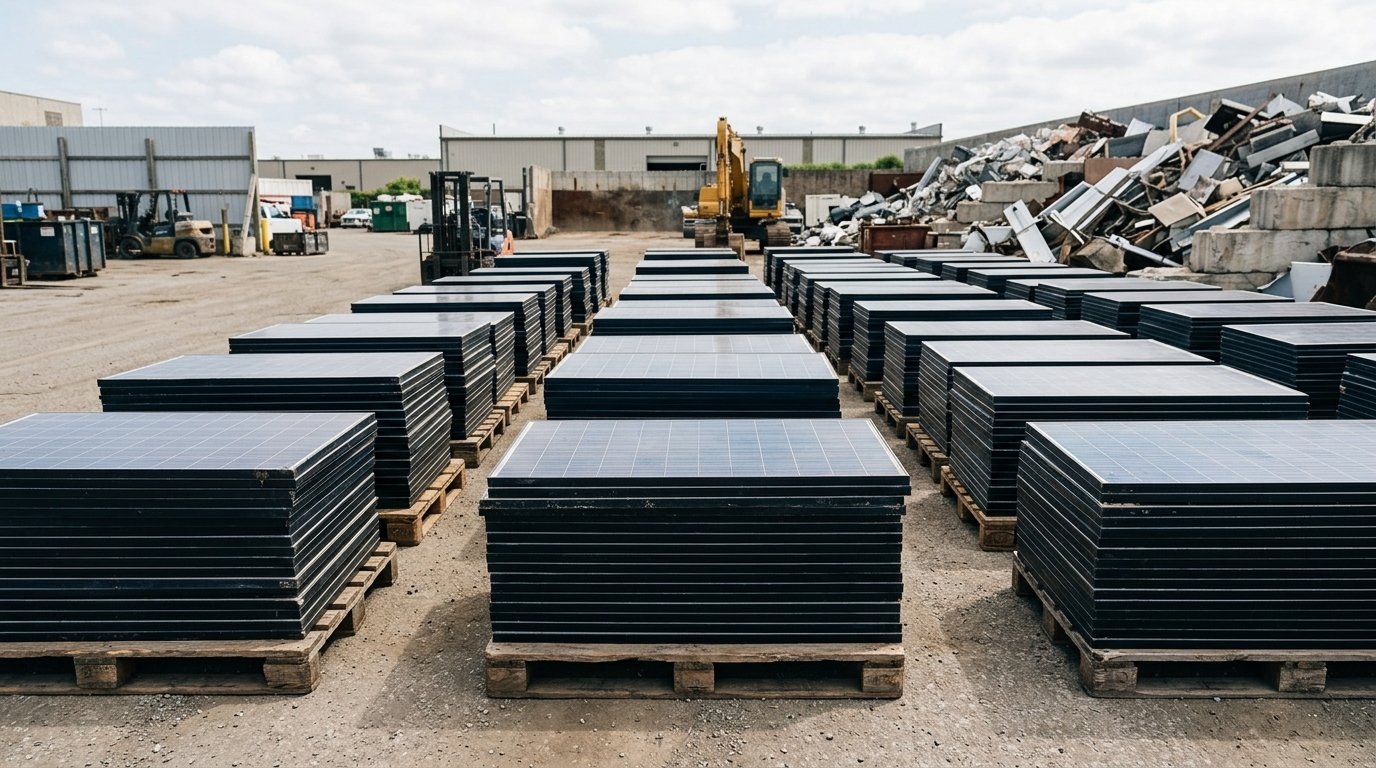
Solar panels last 25-30 years. At end of life they become e-waste and fall under the WEEE Regulations 2013. Producers are obligated to fund take-back, but the practical UK route is via PV Cycle UK or your local authority WEEE site. See our solar panel recycling guide for the disposal process.
Key takeaways
- Green loans at 6.4% APR are the cheapest finance route for buyers with strong credit.
- 0% supplier finance from Octopus, EDF, OVO and E.ON adds £800-£1,200 to total cost vs cash but unlocks installation without savings.
- Solar leases work but can complicate house sale. Check transferability before signing.
- ECO4 grants cover 80-100% of cost for eligible low-income households until 31 March 2026.
- Battery storage doubles the financial return through time-of-use tariff arbitrage.
Sources
Microgeneration Certification Scheme installer pricing data 2026. Barclays, Halifax, Nationwide published green loan rates Q1 2026. Octopus Energy / EDF / OVO / E.ON solar product pages. Energy Saving Trust solar PV cost benefit 2024. OFGEM ECO4 scheme guidance. Solar Energy UK trade body lease guidance 2024.