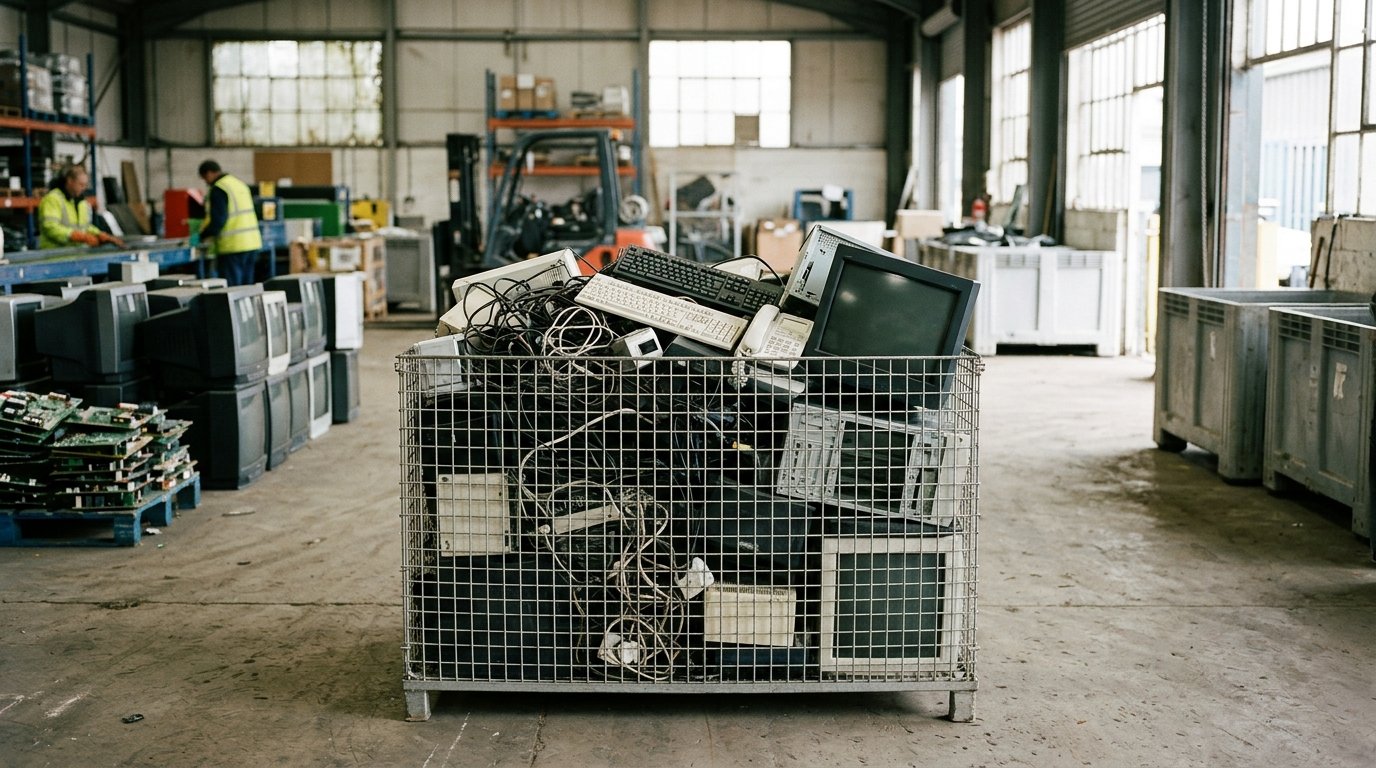
The UK Recycle Your Electricals campaign
Recycle Your Electricals is the UK Material Focus campaign aimed at increasing recycling of small electrical items. Launched 2020, expanded annually. Material Focus is funded by the seven largest UK producer compliance schemes under the WEEE Regulations.
The headline statistic from Material Focus 2024 research: UK households hoard an average of 23 kg of unused electrical items, totalling 880 million items across UK homes. Each ton of electrical waste contains around £1,000 of recoverable materials (gold, silver, copper, rare earth metals).
Why electrical recycling matters
Electrical items contain materials valuable for recovery:
- Gold: 1 tonne of mobile phones contains roughly 280 grams of gold (vs 5-15 grams in 1 tonne of gold ore)
- Silver: similar concentration uplift vs ore
- Copper: 100-150 kg per tonne of waste electronics
- Rare earth metals: neodymium, dysprosium, europium recovered from hard drives, speakers, LED displays
- Plastic: 30-40% of typical electronic waste mass
Hazardous components in electronic waste include lead (CRT screens, older soldered electronics), mercury (older flat screens, fluorescent backlights), cadmium (older batteries), brominated flame retardants. Improper disposal leaches these into soil and water.
What counts as "electrical" for recycling
Per the WEEE Regulations 2013 (UK), any item with a plug, battery, cable, or that uses electricity at end of life counts. Categories:
- Large white goods: fridges, freezers, washing machines, dryers, dishwashers
- Small kitchen: toasters, kettles, microwaves, blenders, coffee machines
- IT and telecoms: laptops, computers, monitors, phones, routers, modems
- Consumer electronics: TVs, radios, speakers, gaming consoles
- Lighting: lamps, energy-saving bulbs, LED tubes
- Tools: drills, sanders, lawnmowers (electric), power tools
- Toys: any battery or plug-in
- Personal care: hair dryers, electric toothbrushes, shavers
- Medical: thermometers, blood pressure monitors (excluding clinical waste)
Free UK disposal routes
Route 1: Recycle Your Electricals postcode locator
The campaign operates a free postcode-based locator at recycleyourelectricals.org.uk. Enter your postcode to find:
- Council drop-off banks within 5 miles
- Retailer take-back stores
- Charity shops accepting working electricals
Coverage: 100% of UK postcodes typically have at least 3-5 free options within 5 miles.
Route 2: Retailer take-back schemes
UK retailers selling electricals must offer take-back (Distributor Take-back Scheme membership or in-store). Major participants:
- Currys: free in-store take-back for any small electrical item; free collection of large appliances when delivering new
- Argos: in-store small electrical drop-off; large appliance collection with new purchase
- John Lewis: free take-back at all stores; free collection of old appliances when delivering new
- Amazon UK: free trade-in programme for laptops, tablets, phones via Amazon Trade-In
- Apple Stores: free trade-in for all Apple products
- Tesco, Sainsbury's, Asda: small electrical drop-off at customer service desks (varies by store)
- B&Q, Homebase: power tool take-back
- IKEA: battery and light bulb recycling at customer service
Route 3: Council Household Waste Recycling Centres
All 365 UK councils operate at least one Household Waste Recycling Centre that accepts WEEE. Most have:
- Dedicated WEEE skip for small electrical items
- Large appliance bay for white goods
- Battery and light bulb collection point
- Separate streams for TVs (often hazardous waste classification due to CRT historic content)
Free for residents; some councils require permits for vans or large loads.
Route 4: Charity shops (working items only)
UK charity shops accept working electricals subject to PAT (Portable Appliance Testing) requirements:
- British Heart Foundation: 700+ shops, dedicated electricals testing centres
- Oxfam: 600 shops, accepts smaller items
- Cancer Research UK: similar scope
- Sue Ryder, Barnardo's, Age UK: 200-500 shops each
Items must work; charities can't accept broken items because of resale safety requirements.
Route 5: Manufacturer take-back
Many manufacturers offer free take-back programmes:
- Apple: free trade-in via Apple Trade In, even for non-Apple devices
- Samsung: trade-in via Samsung Recycle
- HP, Dell, Lenovo: mail-back recycling programmes for their hardware
- Canon, Epson: mail-back for printer cartridges and old printer hardware
Route 6: Council kerbside collection (where offered)
Some UK councils offer kerbside collection of small electricals:
- London Borough of Hackney: dedicated small WEEE kerbside collection
- Norwich City Council: monthly collection programme
- Cornwall Council: kerbside small electrical scheme
- Lambeth Council: WEEE kerbside trial 2023+
Most other councils require drop-off at a recycling centre or retailer.
What about cables, plugs, and chargers
Small electrical accessories often forgotten:
- USB cables, phone chargers: accept at retailer take-back (Currys, John Lewis) or HWRC
- Plugs: HWRC WEEE skip; some councils accept in kerbside if separated
- Adapters and extension leads: same as cables; HWRC or retailer take-back
- Batteries (separate from devices): supermarket battery bins (Sainsbury's, Tesco, Co-op all run battery collection at front-of-store)
Why hoarding electricals matters
Material Focus 2024 calculation: the 880 million UK hoarded items contain:
- £370 million of recoverable gold
- £180 million of recoverable copper
- £140 million of recoverable silver
- £85 million of recoverable rare earth metals
If all unused electricals were recycled instead of stored, the material recovery value would fund roughly 18 months of UK WEEE Producer Compliance Scheme operating costs.
For laptops, computers, phones, and storage drives, perform data destruction before disposal:
- Sign out of cloud accounts (iCloud, Google, Microsoft)
- Factory reset the device
- For maximum security: use NIST 800-88 guidelines Clear software wipe (Blancco Drive Eraser, Macrium Reflect Free, DBAN)
- For regulated data: use certified data destruction service (£4-£35 per device)
Some retailer take-back schemes (Apple Trade In, Currys) include free factory reset as part of the service.
Key takeaways
- UK households hoard 23 kg average of unused electrical items, totalling 880 million items
- Recycle Your Electricals campaign postcode locator covers 100% of UK postcodes
- Major retailers (Currys, Argos, John Lewis, Apple) accept free take-back regardless of where purchased
- 365 UK council Household Waste Recycling Centres all accept WEEE for free
- Always factory reset and clear cloud accounts before disposing of data-bearing devices
Sources
Material Focus UK 2024 research and campaign data. Recycle Your Electricals postcode locator. UK WEEE Regulations 2013. Material Focus producer-funded campaign documentation. Currys, John Lewis, Argos published take-back guidance 2026.