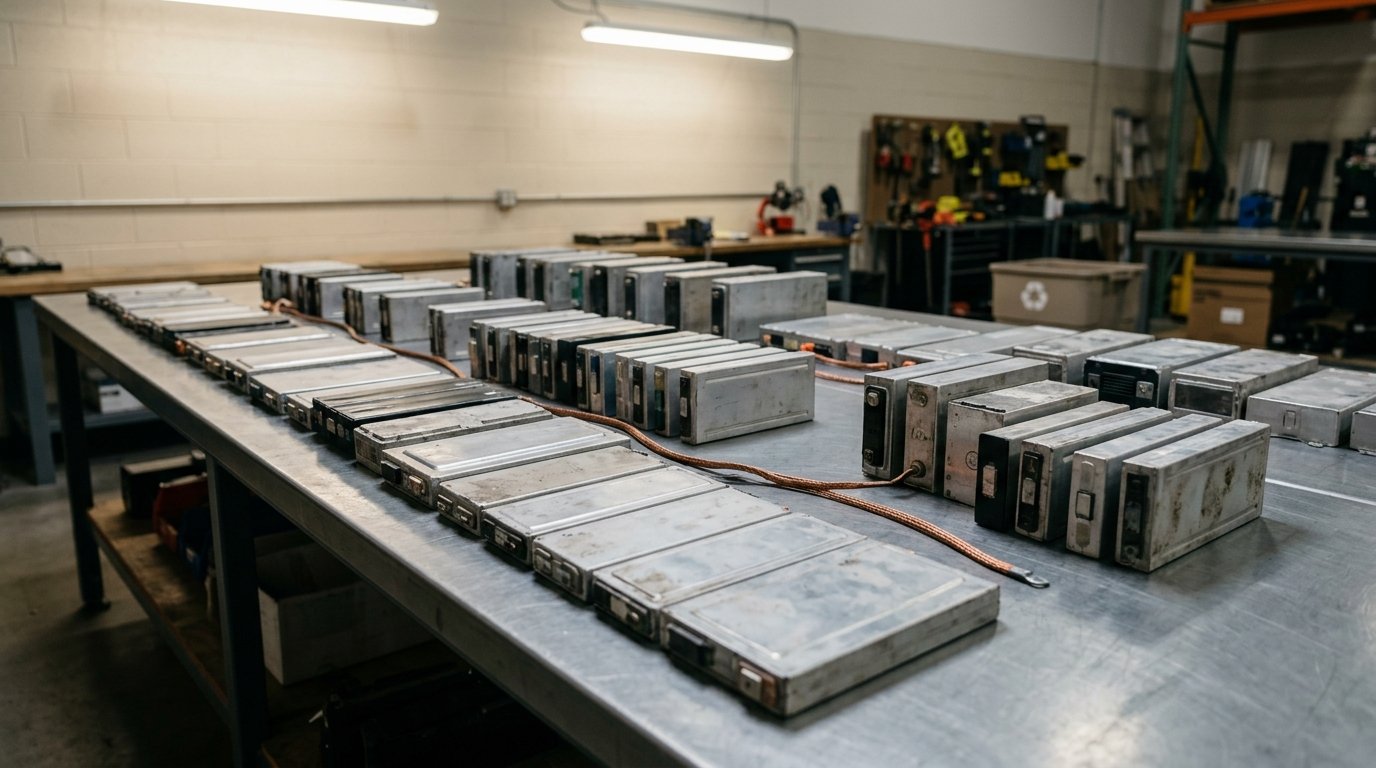
When does a car battery actually need replacing
Typical lead-acid car battery lifespan in 2026 is 4-7 years, depending on climate and usage. Signs a replacement is needed:
- Engine cranks slowly during cold mornings
- Headlights dim noticeably when revving
- Multimeter reading drops below 12.4V at rest, below 9.6V during cranking
- Battery case is bulging, cracked, or leaking
- Battery is over 5 years old (most fail by year 7)
Modern AGM (Absorbed Glass Mat) batteries fitted to start-stop vehicles typically last 4-6 years. Conventional flooded lead-acid batteries can last 6-8 years with care.
Before replacing - check if charging fixes it
Sulfation buildup on battery plates causes capacity loss that often appears as battery failure. Two test routes:
- Multimeter at rest: connect terminals to multimeter. Below 12.4V indicates discharged or sulfated battery.
- CTEK or NOCO smart charger overnight: modern chargers run desulfation cycles that recover 60-70% of failing batteries. £40-£100 charger cost vs £80-£250 new battery cost. Worth trying first.
If neither approach restores full capacity, replacement is needed.
What you need to replace a car battery
Tools (~£15-£40 one-time cost or borrow from friend):
- 10mm socket wrench (most UK and US cars)
- 13mm or 15mm wrench (some larger SUVs and trucks)
- Battery terminal cleaner or wire brush
- Anti-corrosion spray (optional)
- Memory saver (OBD-II adapter that maintains radio presets and engine control unit memory during swap)
- Eye protection
Plus the new battery (correct group size for your vehicle):
- UK: cross-reference at Halfords or Euro Car Parts using reg plate
- US: cross-reference at AutoZone, O'Reilly, Advance using year/make/model
Typical 2026 prices:
| Battery type | UK retail | US retail |
|---|
| Standard 60Ah | £55-£95 | $75-$130 |
| Standard 75Ah | £75-£125 | $100-$165 |
| AGM 60Ah | £110-£180 | $145-$235 |
| AGM 80Ah | £140-£220 | $180-$295 |
Step-by-step replacement
1. Park safely and prepare
Park on level ground, engine off, key out of ignition. Open the bonnet/hood. Wear eye protection.
2. Connect memory saver (optional)
Plug the memory saver into the OBD-II port. This keeps radio presets, ECU adaptation values, and electronic settings during the swap. Without it, the car may need 100+ miles to re-learn driving characteristics.
3. Disconnect terminals - negative first
Loosen the negative (-) terminal first using a 10mm socket. Lift the clamp off the post. Important: always negative first to prevent short circuits.
Then disconnect the positive (+) terminal. Tuck both cables clear of the battery.
4. Remove the hold-down clamp
Most batteries are secured by a hold-down clamp at the base or top. Unscrew using 10mm or 13mm bolt.
5. Lift out the old battery
Lead-acid batteries weigh 11-25 kg. Use both hands. Lift straight up; never tilt (electrolyte can leak from breather holes).
6. Clean the tray and terminals
Wipe the battery tray. Use terminal cleaner or wire brush on the cable clamps to remove white/green corrosion.
7. Install the new battery
Place the new battery in the tray, oriented same as the old one. Connect:
- Positive (+) terminal first, tighten to 8-10 Nm
- Negative (-) terminal second, tighten to 8-10 Nm
- Reinstall hold-down clamp
- Apply anti-corrosion spray to terminals (optional)
8. Test
Start the engine. Check headlights are bright. Some modern cars require a "battery reset" via OBD-II tool - check owner's manual or YouTube for your specific model.
9. Disconnect memory saver
Remove the OBD-II memory saver.
What to do with the old battery
Never put car batteries in household bins or skips. Lead-acid batteries are hazardous waste. UK and US law requires them to be recycled.
UK disposal routes (all free)
- Garage or fitting service: every UK garage takes old batteries when fitting a new one. Free.
- Halfords: free drop-off at any of 400+ UK Halfords stores. No purchase required.
- Kwik Fit, ATS Euromaster, Formula One Autocentres: same. Drop off the old battery; they handle disposal.
- Council Household Waste Recycling Centre: most accept car batteries in the hazardous waste bay. Free.
- Scrap metal merchants: typically pay £2-£8 per battery (UK 2026 prices reflect lead market value).
US disposal routes
- AutoZone, O'Reilly, Advance Auto Parts: free drop-off at any store. Many offer a $5-$10 core charge refund if you bought a new battery there.
- Battery Council International approved facilities: search batterycouncil.org for nearest.
- Walmart Auto Care Centers: accept old batteries during new battery purchases.
- Municipal hazardous waste collection events: most US cities run quarterly events.
- Scrap metal recycling: pays $5-$15 per battery typical 2026.
Lead-acid batteries are one of the most successfully recycled consumer products globally:
- UK recycling rate: 99%+ (Battery Waste Directive 2008)
- US recycling rate: 99%+ (per Battery Council International)
- Lead recovery rate: 99% of lead from collected batteries is recovered
- Plastic case recovery: 95% of polypropylene cases are recycled
- Acid neutralisation: sulphuric acid neutralised then reused or safely disposed
A typical car battery contains 8-10 kg of lead, 1-2 kg of plastic, and 3-4 kg of sulphuric acid (water diluted). All recoverable. The economic value drives near-complete collection rates.
When to call a professional
DIY battery swap is safe for most modern cars but call a fitting service if:
- BMW, Mercedes, or Audi with battery registration requirement (BMW requires OBD-II registration of new battery)
- Hybrid or EV (high-voltage main battery; low-voltage 12V battery still needed but more complex)
- Start-stop AGM systems requiring specific charging protocol on first install
- Battery is mounted under a seat or in the boot (some Volvos, Range Rovers, Audis)
Fitting cost typically £15-£45 UK or $20-$60 US. Halfords offers free fitting when you buy the battery from them.
Key takeaways
- Test the battery before replacing - desulfation chargers recover 60-70% of failing batteries
- DIY replacement takes 20 minutes with a 10mm socket wrench
- Disconnect NEGATIVE terminal first, reconnect POSITIVE first
- All UK fitting services (Halfords, Kwik Fit) accept old batteries free
- US options: AutoZone, O'Reilly, Advance Auto Parts free drop-off
- Lead-acid batteries have 99%+ recycling rates globally; never put in household bins
Sources
UK Battery Regulations 2009 + EU Battery Directive 2008. Battery Council International recycling statistics 2024. Halfords, Kwik Fit, ATS Euromaster service guidance 2026. AutoZone, O'Reilly, Advance Auto Parts published policies. CTEK and NOCO desulfation charger documentation.