How home contents insurance treats electronics
UK home contents insurance covers electronic items as part of "general contents" up to a single-item limit, typically £1,500-£2,500. Anything more expensive needs to be listed by name on the schedule as a "specified item" or "valuable".
The Association of British Insurers reports that electronics make up 31% of all home contents claims by value in 2024, with an average payout of £2,180 per electronics claim. Theft accounted for 47% of those claims, accidental damage 28%, fire and smoke 15%, and water damage 10%.
Standard cover includes TVs, laptops, desktops, monitors, games consoles, audio equipment, kitchen appliances, smart home devices, and small electrical goods. Phones are usually covered while in the home but excluded for loss outside the home unless personal possessions cover is added.
Single-item limits explained
The single-item limit is the maximum the policy pays for any one item under "unspecified contents". The five most common limits in UK policies 2026:
| Insurer | Standard single-item limit | Higher tier available |
|---|
| Direct Line | £1,500 | £3,000 (Premier) |
| Aviva | £2,000 | £5,000 (Plus) |
| LV= | £2,500 | £7,500 (5 Star) |
| Admiral | £1,500 | £2,500 (Gold) |
| Hastings Direct | £1,000 | £2,500 (Premier) |
A 65-inch OLED TV (typical 2026 retail £1,800-£3,200) sits at or above the standard limit on most policies. A high-end MacBook Pro (£2,499-£3,899) exceeds the limit on every standard tier. List both as specified items or buy the higher tier.
Accidental damage: standard vs add-on
This catches more people out than any other policy detail. "Buildings cover accidental damage" and "contents cover accidental damage" are two separate add-ons on most UK home policies.
Without contents accidental damage:
- TV smashed by toddler's toy: not covered (deliberate act by household member)
- Wine spilled on laptop: not covered (accidental damage to single item)
- Coffee in keyboard: not covered
With contents accidental damage:
- All three covered, subject to excess (typically £75-£250)
The add-on costs £25-£60 per year. The ABI 2024 data shows 38% of UK home policies include it as standard, 62% require the add-on.
What proof of ownership insurers actually want
The Financial Ombudsman Service upheld 41% of contents insurance claim disputes in 2024 against the insurer. The single most common dispute was failure to prove ownership of high-value electronics.
The five proofs that pass without question:
- Original purchase receipt (paper or email)
- Bank or credit card statement showing the purchase
- Photograph of the item in your home with date metadata (modern phones embed this automatically)
- Original box with serial number (most TVs, laptops, consoles)
- Online retailer order history (Amazon, Currys, Apple, John Lewis all retain 5+ years)
Three proofs that often fail:
- Recent photo without the original box (insurer may suspect re-staged)
- Bank statement only showing "Amazon" without itemised receipt
- Item gifted to you without paperwork
Keep digital backup of every electronics purchase receipt above £300. Apple, Currys and John Lewis all support self-service receipt retrieval through their account portals.
Common reasons claims get refused
Per FOS published decisions 2024:
- Unforced entry: 24% of refused electronics theft claims. The policy needs evidence of forced entry on a standard home contents wording.
- Misrepresentation at quote: 18%. Disclosing fewer items than actually owned, wrong postcode, undeclared previous claims.
- Failure to take reasonable care: 14%. Laptops left visible in cars, expensive items unattended in public spaces.
- Unoccupied property: 12%. Most policies exclude theft when the property has been unoccupied for 30+ consecutive days.
- Wear and tear: 9%. A failing 6-year-old TV is not a claim.
What to do after electronics theft or damage
Same-day actions:
- Call the police on 101 for theft. Get a crime reference number.
- Photograph the scene and damage before moving anything.
- Contact the insurer's 24-hour claims line, not your broker.
- Make a complete inventory of missing or damaged items.
Within 7 days:
- Email the inventory with serial numbers, purchase dates, and replacement costs.
- Submit proof of ownership for each item over £300.
- Get two written replacement quotes from named retailers.
- Keep damaged items until the insurer confirms they can be disposed of.
Average claim settlement time across the top 10 UK home insurers in 2024 was 21 working days from claim to settlement (ABI), with LV= and NFU Mutual fastest at 14-16 days.
When old electronics are replaced "new for old"
Most modern UK home contents policies operate on "new for old" basis, meaning the insurer pays the cost of a current equivalent item, not the depreciated value of the old one.
Three exceptions to watch for:
- Clothing and linen: indemnity (depreciated) on most policies
- Items over 10 years old: some insurers apply depreciation regardless of stated cover basis
- Cosmetic-only damage: the insurer can choose to repair rather than replace
A 2018 50-inch LED TV destroyed in 2026 is replaced with a 2026 50-inch LED (typically a better panel for similar money). The insurer does not pay for an upgrade to OLED unless the original was OLED.
Insurance and recycling: what to do with payout items
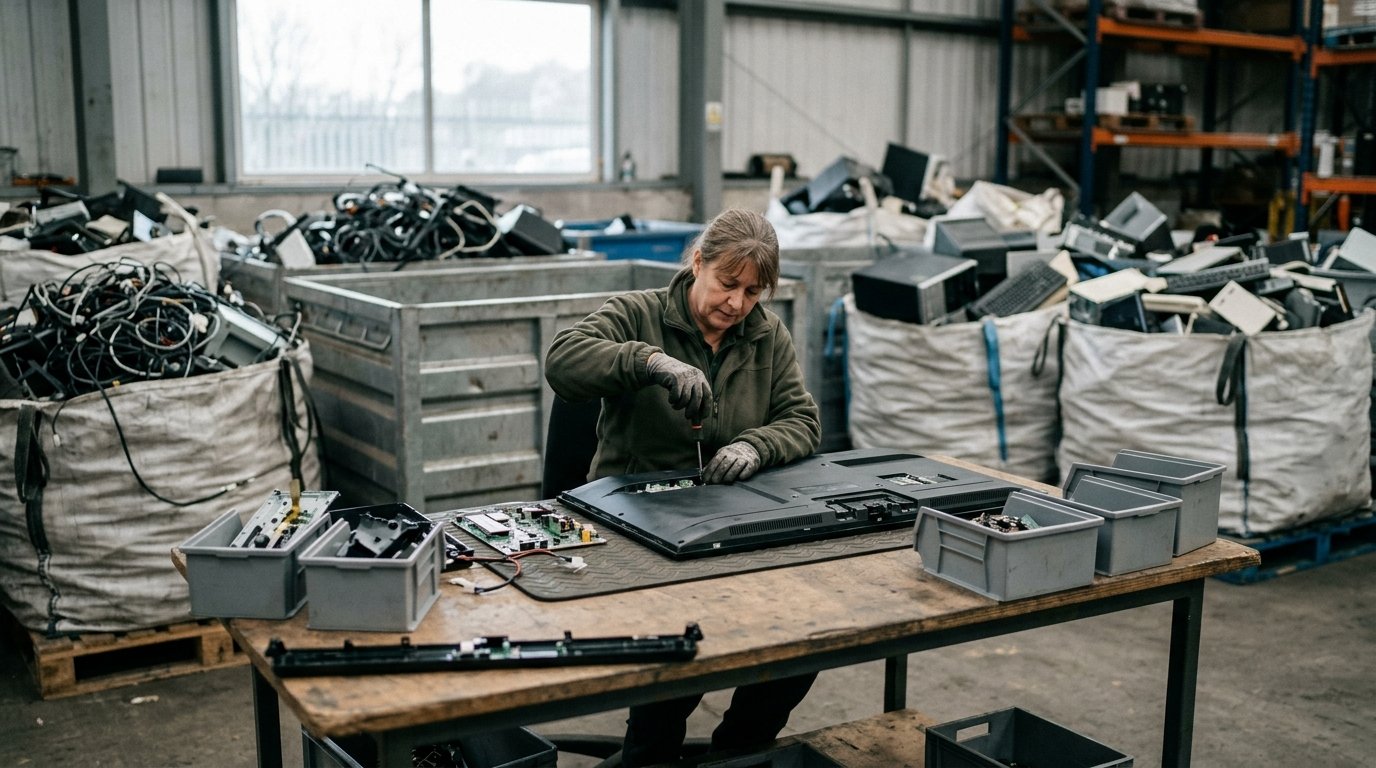
When an insurer pays out on damaged but salvageable electronics, ownership of the item passes to the insurer ("salvage right"). The insurer often disposes through their salvage agents. If they let you keep the item, dispose of it yourself through a certified e-waste recycler rather than landfill. UK WEEE regulations require this for any electronic item with a plug.
Key takeaways
- UK home contents covers electronics up to a single-item limit of £1,000-£2,500. List anything above as a specified item.
- Average UK electronics claim payout is £2,180 (ABI 2024). 47% of electronics claims are theft.
- Contents accidental damage is a separate add-on on 62% of UK policies. Without it, broken screens and spills are not covered.
- Proof of ownership is the single biggest claim dispute trigger. Keep digital receipts for every purchase over £300.
- "New for old" replacement is standard. The insurer pays for a current equivalent, not the depreciated value.
Sources
Association of British Insurers Home Contents Claims Data 2024. Financial Ombudsman Service published decisions 2024. Direct Line / Aviva / LV= / Admiral / Hastings Direct published policy wordings 2026. UK WEEE Regulations 2013.