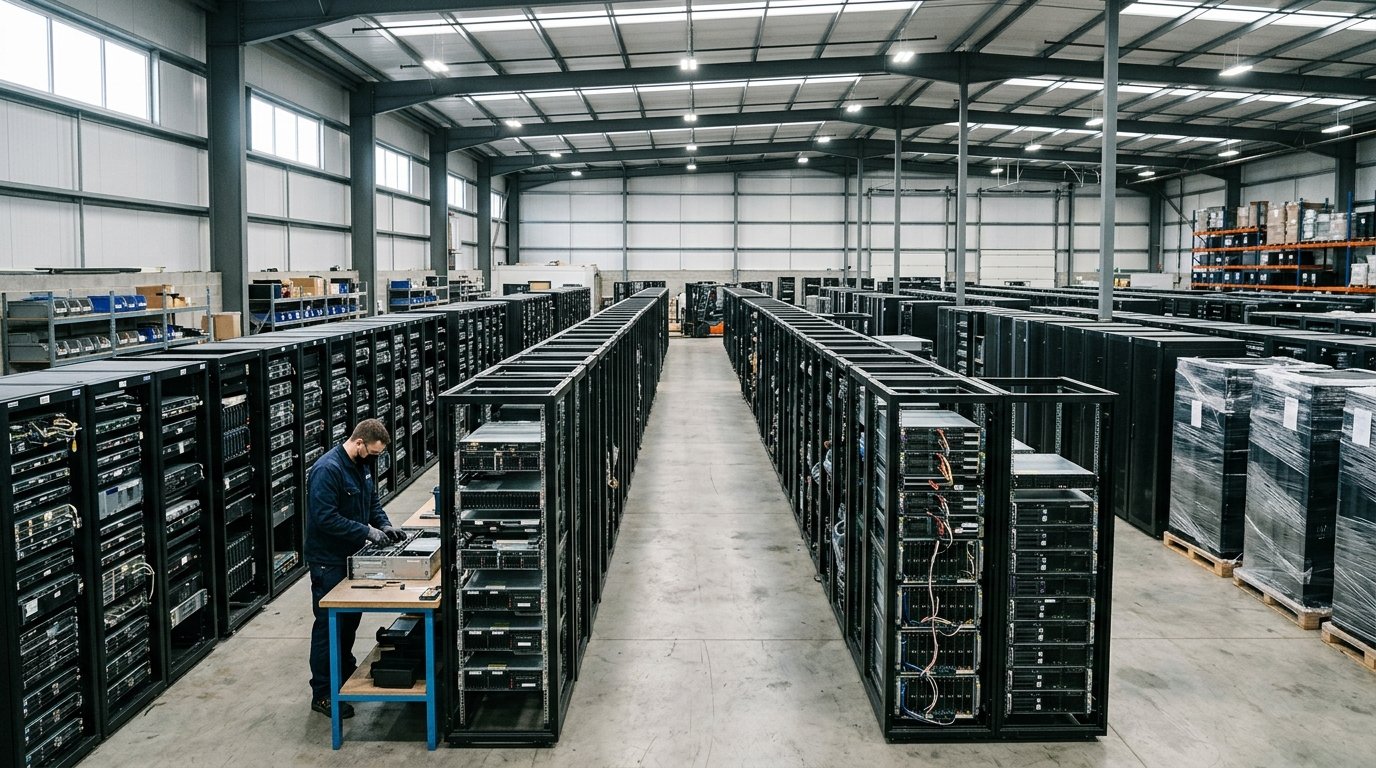
The four ways UK businesses acquire IT equipment
Most SMEs treat "lease or buy" as a binary, but there are four distinct routes with sharply different tax treatments and end-of-life implications.
- Outright purchase: own from day one, capital allowance treatment.
- Hire purchase (HP): own from day one, financed over 1-5 years.
- Finance lease: lessor owns, lessee uses, P&L impact like ownership.
- Operating lease: lessor owns, lessee uses, cost runs through P&L as rental.
UK businesses spent £14.3 billion on IT equipment in 2024 (Tech Market View 2025). Approximately 38% was funded through leasing or HP, the rest cash or via traditional loans.
How HMRC treats each option
Outright purchase: qualifies for either Annual Investment Allowance (£1 million per year, 100% relief in year of purchase) or, for plant and machinery above the AIA, the 18% writing down allowance on a reducing balance basis. Most SME IT purchases sit comfortably within the AIA.
Hire purchase: the asset is treated as bought on day one for capital allowances. AIA available even though you haven't paid the cash yet. Interest charges in the HP agreement are P&L deductible separately.
Finance lease: the asset goes on the balance sheet under FRS 102 Section 20 (or IFRS 16 for larger firms). The lease payments split into a finance charge (P&L) and a capital reduction (balance sheet). No capital allowance because the lessor claims it.
Operating lease: the asset stays off-balance-sheet under FRS 102 Section 20 (it goes on under IFRS 16). Lease payments are 100% deductible against taxable profit in the year paid. No capital allowance.
For most SMEs in the UK using FRS 105 or FRS 102 Section 1A, operating leases offer the cleanest P&L treatment. For corporation tax planning, AIA on outright purchase gives the biggest first-year deduction.
Real 3-year cost: £30,000 of laptops for a 50-person firm
Scenario: 30 laptops at £1,000 each, refresh cycle 3 years, 19% corporation tax. The numbers per route:
| Route | Cash out over 3yr | Tax saved (yr 1) | Net cost after tax | Asset value at yr 3 |
|---|
| Cash purchase | £30,000 (yr 1) | £5,700 (AIA) | £24,300 | ~£3,000-£6,000 resale |
| Hire purchase 36mo @ 7% APR | £33,360 | £5,700 (AIA yr 1) | £27,660 | Owned, ~£3,000-£6,000 resale |
| Finance lease 36mo | £32,400 | £6,156 (split over 3yr) | £26,244 | Optional buyout £600 |
| Operating lease 36mo | £31,200 | £5,928 (over 3yr) | £25,272 | Returned to lessor |
Outright cash purchase has the lowest net cost but ties up working capital. Operating lease has the second-lowest net cost and preserves cash flow.
Hire purchase is the most expensive route. The APR adds £3,360 over 36 months which exceeds the tax saving advantage.
The lease-end disposal trap
Operating leases end with the equipment going back to the lessor. This sounds simple, but the contract usually requires the equipment in "good working order" with:
- All accessories returned (chargers, dock, original box if specified)
- Asset tags removed
- Data wiped to a certificated standard (NIST data sanitisation standard Clear or Purge)
- No physical damage beyond fair wear and tear
End-of-lease charges are where lessors recover margin. The 2024 Asset Finance Network industry survey found average end-of-lease damage and refurbishment charges of £62 per laptop, £180 per workstation, and £900 per rack server above the contracted rental.
Most lessors also charge for data sanitisation if it wasn't done by the lessee. £25-£60 per device is typical. Doing this in-house or via a IT asset disposition) before return saves the markup.
When leasing wins on cash flow
Leasing makes the strongest case for businesses that:
- Refresh hardware every 2-3 years (the lease term matches the obsolescence cycle)
- Need to preserve working capital for growth investment
- Operate in industries where staying on current technology drives win rates (creative, finance, software development)
- Bill clients on time-and-materials (the lease cost flows cleanly through to project profitability)
- Have variable team sizes where flexibility matters more than ownership
When ownership wins:
- Refresh cycles longer than 4 years (laptops, monitors that get hand-me-down to new joiners)
- High-utilisation kit where end-of-lease damage charges would exceed savings
- Tax loss positions where AIA can't be used in year of purchase
- Specialised kit with no remarketing value (custom configurations, ruggedised devices)
Whichever route you choose, retiring IT equipment in the UK creates two legal obligations:
- GDPR Article 5(1)(f): ensure appropriate security of personal data, including against accidental loss, destruction, or damage.
- WEEE Regulations 2013: producer-funded take-back or B2B disposal through an Authorised Treatment Facility.
Both obligations sit with the data controller and original equipment user, not the lessor. End-of-lease contracts often disclaim lessor responsibility for data sanitisation, which means a botched wipe leaves the lessee legally exposed.
Our data destruction service cost comparison compares the seven main UK ITAD providers for end-of-lease and end-of-life equipment.
Common SME mistakes
- Choosing HP for tax reasons when AIA is available: HP costs more in interest than the AIA timing benefit recovers. Cash buy beats HP nearly always when AIA is available.
- Operating lease for kit with long useful life: leasing a monitor for 5 years can cost double the cash price.
- Forgetting data sanitisation cost at lease end: budget £25-£60 per device or face lessor charges.
- Not noticing the residual value buyout clause: some finance leases have a balloon payment at the end that wasn't included in the headline monthly cost.
- Mixing personal data on leased devices without encryption: a lost or stolen lease return triggers GDPR liability even though the device technically belongs to the lessor.
Key takeaways
- AIA gives £1 million of 100% first-year tax relief on outright IT purchases. Use it before considering finance options.
- Operating lease is the cheapest finance route on a 3-year refresh cycle for typical SME IT.
- Hire purchase costs more than cash buy in nearly every scenario where AIA is available.
- Lessors charge £25-£60 per device for end-of-lease data sanitisation. Doing it via a certified ITAD saves the markup.
- Data destruction obligations under UK GDPR sit with the lessee, not the lessor, even on returned leased equipment.
Sources
HMRC Capital Allowances Manual CA20006 and CA23110. FRS 102 Section 20 (Leases). Asset Finance Network UK Industry Survey 2024. Tech Market View UK IT Equipment Spending Report 2025. UK GDPR Article 5. WEEE Regulations 2013.