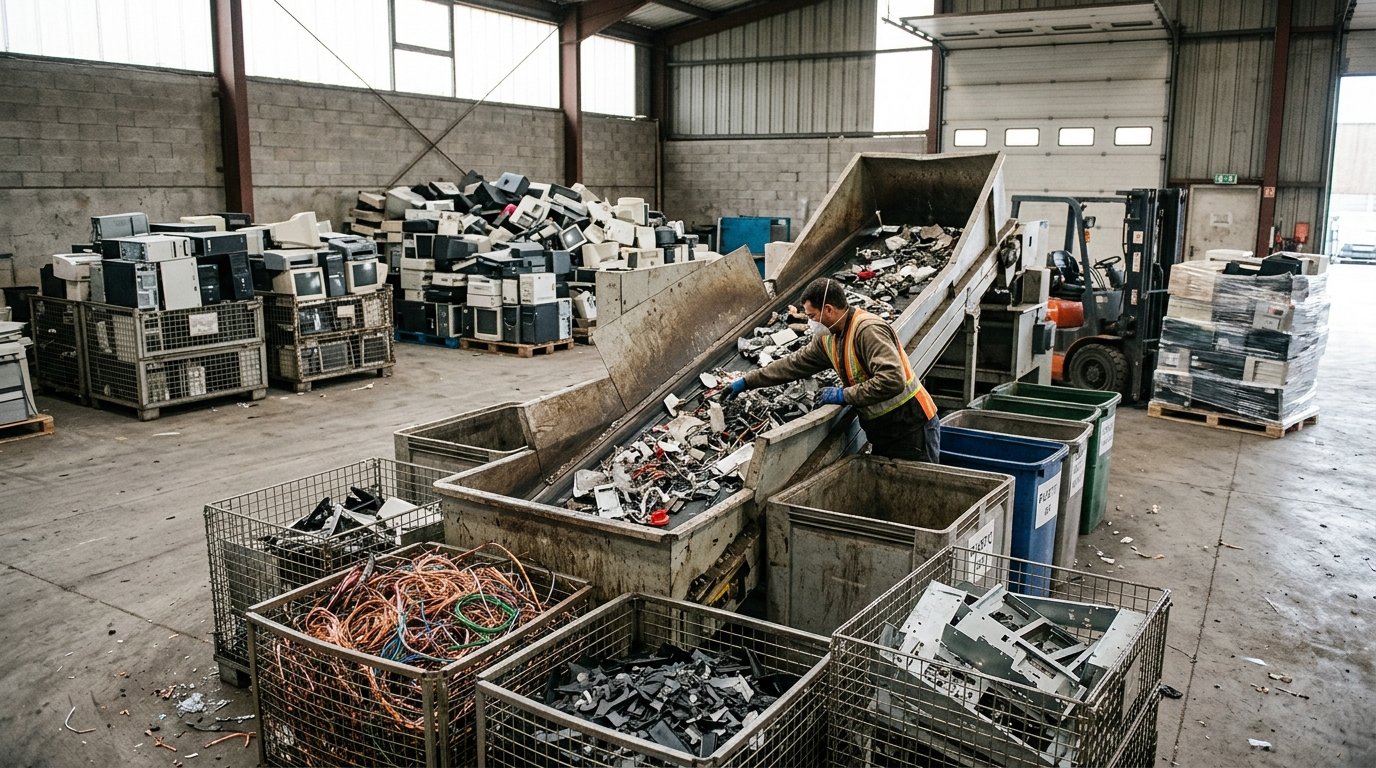
Can You Recycle Magazines? Yes, according to the eCycling Central guidelines, magazines, catalogs, and glossy inserts are accepted in all curbside paper recycling programs across the United States. This includes staples, which modern recycling mills can easily remove during processing. It is important to ensure that any plastic wrapping or non-paper materials are removed before placing them in your recycling bin.
Can You Recycle Magazines? The ease of recycling magazines stems from their composition primarily of cellulose fibers derived from trees, mixed with small amounts of clay and chemicals for the glossy finish. This makes them similar to other paper products in terms of recyclability. As of 2023, over 65% of all magazine subscriptions were recycled, highlighting the significant volume of magazines that are successfully repurposed each year.
sed of cellulose fibres from trees, mixed with small amounts of clay and chemicals for their glossy appearance.
How to Recycle Magazines Properly
To recycle magazines properly, start by removing any plastic wrap or non-paper inserts. Then, place them in your kerbside recycling bin if you live in the UK, or curbside paper recycling bin if you're in the US. If your local program doesn't accept glossy papers, check with Earth911 (a US-based service) or RecycleNow (UK-based service) for drop-off locations.
Alternatives to Throwing Magazines Away
Before tossing magazines into a recycle bin, consider donating them to libraries, schools, waiting rooms, or community centres. Alternatively, swap them at local book exchanges or online platforms like BookMooch. In the UK, you can also give your unwanted magazines to charity shops such as Oxfam or Shelter.
FAQ
Q: Can I recycle magazines with plastic covers?
A: Yes, remove any plastic coverings first and place just the paper part in your kerbside recycling bin.
Q: Are magazines recyclable if they have a glossy finish? A: Absolutely. Magazines are made of cellulose fibres from trees and can be recycled along with other paper products.
Q: What should I do if my local recycling service doesn't accept magazines? A: Look up Earth911 or RecycleNow to find nearby drop-off locations that will take your magazines.
Sources
Can You Recycle Magazines?: framework + alternatives + FAQs (2026-05-20)
Practical 5-step process
- Confirm device condition + age. Working post-2018 device → trade-in route. Older or broken → recycling route. Compare via Trade-In Best Price Finder before committing to recycling.
- Sanitise the device. Sign out of cloud services (iCloud, Google, Microsoft, Samsung). Factory reset via Settings menu. For sensitive data: certified ITAD provider with NIST media sanitisation sanitisation - see Hard Drive Destruction Cost Calculator.
- Find a compliant disposal route. Manufacturer take-back (free for like-for-like purchases under EU WEEE / UK WEEE / select US state laws), retailer drop-off (free at most major retailers), or certified local recycler. Use our Recycling Locator for nearby options.
- Document the disposal. Get a Certificate of Destruction for any data-bearing device (free template via our GDPR Data Erasure Certificate Generator). Keep for 3-7 years depending on data classification.
- Verify the downstream certification chain. Reputable recyclers partner with R2v3 / R2 + e-Stewards explained / ISO 14001 certified processors. Ask which standard the downstream processor holds before drop-off.
Why this matters legally
Skipping compliant disposal has measurable penalty exposure:
- EU WEEE Directive 2012/19/EU + UK WEEE Regulations 2013: producer + waste-generator liability. Penalties typically £5,000-£50,000 per incident under environmental enforcement.
- US state e-waste laws: 25 states have mandatory laws as of 2026. Penalties range $1,500-$25,000 per incident (California Universal Waste Rule, New York Electronic Equipment Recycling and Reuse Act).
- EPA RCRA 40 CFR Part 273: federal Universal Waste Rule covers e-waste. Up to $76,764 per day per violation as of 2026.
- UK GDPR + EU GDPR Art 32: personal data on disposed devices triggers liability if not properly sanitised. Penalties up to £17.5M or 4% global turnover.
Check your specific risk via E-Waste Fines Checker.
Three common consumer mistakes
- Putting electronics in general waste. Most jurisdictions explicitly ban this; municipal collection rejects loads at the kerb.
- Trusting "free pickup" without verifying certification. Some scrap collectors export to non-OECD countries (violates e-Stewards + Basel Convention). Always ask for R2v3 or e-Stewards certificate before handing over devices.
- Wiping data via factory reset only on SSDs. Factory reset on SSD does NOT cryptographically erase - drive may still have recoverable data. Use NIST media sanitisation Purge for SSDs.
Frequently asked questions
Is electronics recycling always free? For consumer drop-off and mail-in: yes, free at point of use under producer-pays framework. Exceptions: bulk appliance pickup ($25-$50), CRT TVs/monitors ($19-$50), oversized batteries.
Will the recycler resell my data? Reputable recyclers either (a) wipe to NIST 800-88 standard before any onward sale, or (b) physically destroy data-bearing media before reuse path. Ask which method applies before drop-off.
What happens if my device still has value? Don't recycle - trade in first. Even a 5-year-old smartphone often fetches £25-£80 trade-in vs $0 recycling. Compare via Trade-In Best Price Finder.
Related guides + tools
---
Framework verified against EU WEEE Directive 2012/19/EU + UK WEEE Regulations 2013 + EPA RCRA 40 CFR Part 273 + US state e-waste laws + NIST SP 800-88 Rev 1 as of 2026-05-20. Operated by Defining Style Limited (UK Companies House 10572391, ICO Registration ZA711914). Rules update annually - verify current penalties on enforcement-authority sites before relying on figures.
Are magazines recyclable? Complete 2026 guide
Yes, including the glossy cover - here's why
Most US municipal recycling programs accept magazines exactly as you receive them: glossy cover, perfume samples, mailing label, staples, and all. The reason this works is that paper mills sort by fibre length and grade, not by surface coating. Magazines fall into the "OMG" category (Old Magazines) - a high-grade paper stream that mills actively want because the long fibres make excellent recycled office paper and tissue products.
The misconception that glossy paper isn't recyclable comes from a real issue in the 1980s when clay coatings were harder to separate from fibre. Modern mill processes (since the mid-1990s) handle clay-coated stock with no problem. Confirmed via the American Forest & Paper Association's 2024 magazine recovery survey.
What's in a magazine (and how it recycles)
A typical 100-page glossy magazine weighs about 200g and contains:
- Body pages: groundwood fibre (cheap, from softwood pulp) with clay coating + binder for glossy finish - 85-95% of weight
- Cover stock: heavier clay-coated paper, sometimes with a UV gloss layer - 5-10% of weight
- Staples: 2-3 small steel binding staples - 0.5g total - magnetically separated at mill
- Perfume sample / scratch-and-sniff microcapsules: <0.1g, washes out in pulping
- Mailing label adhesive: water-soluble, dissolves in pulper
- Ink: soy-based on most US covers + petrochemical on imported titles - removed by mill flotation deinking
100% of the magazine's mass (less the steel staples, sold separately as scrap) becomes recovered fibre.
Where magazines should go in your bin
| Bin type | Accept? | Notes |
|---|
| Single-stream recycling (most US households) | Yes | Just toss in - sorting facility separates paper from container streams |
| Paper-only kerbside (some NYC, Boston, SF) | Yes | Magazines go in the same paper bag/bin as newspapers and junk mail |
| Cardboard-only kerbside | No | Magazines are paper, not corrugated cardboard - they belong in paper stream, not OCC stream |
| Trash bin | No | Misses revenue. Magazines are worth $80-$150/ton in the OMG market |
| Compost bin | No | Inks and coatings are not certified compostable in any US municipal compost program |
What to do with magazines you can't recycle
A handful of magazines DO cause issues at most mills:
- Tabloids/newsprint hybrids (some celebrity weeklies) - lower-grade paper, mills accept but pay less. Still recyclable.
- Magazine inserts (some perfume samples in plastic wrap) - remove the plastic film before recycling, throw the film in plastic bag drop-off at supermarkets.
- Comics with stitched (NOT stapled) binding - thread bindings clog deinking equipment. Remove and trash the thread; recycle the pages.
- Coffee-table books with leather/cloth covers - covers go to trash, pages to paper recycling.
Cost-and-revenue benchmarks (USA, May 2026)
- OMG (Old Magazines) mill payback: $80-$150 per US ton (varies by region and grade)
- Number 8 OMG-grade fibre is one of the most-sought paper streams in US recycling - higher demand than office paper (which is shrinking with the digital office)
- Kerbside collection cost to municipality: $35-$60 per ton (so OMG is one of the few paper streams that pays for itself)
- US magazine recycling rate (EPA 2024 data): 53.2% - actively rising as digital subscriptions reduce raw magazine volume
Library donation - the better-for-paper-quality option
For physical magazines less than 24 months old in good condition, library donation often beats recycling:
- Most US public libraries accept current-year magazines for the reading room
- Senior centers and nursing homes have ongoing demand for large-print and hobby titles
- Doctor's office waiting rooms and barbershops often run informal pickup programs
- Friends of the Library book sales accept magazines for $0.25-$1 fundraising sales
Donate first, recycle second.
Plastic mailing wrap - separate stream
The clear plastic film around mailed magazines is plastic #4 (LDPE) - NOT accepted in most kerbside but IS accepted at supermarket plastic-bag drop-offs (Whole Foods, Trader Joe's, Walmart, Kroger, etc.). Stuff a few wrappers into the same bag as your grocery plastic bags for monthly drop-off.
Sources
- American Forest + Paper Association OMG fibre demand survey (2024)
- US EPA Sustainable Materials Management paper data (FY2024)
- AF+PA mill payback rate survey, quarterly
- ANSI/NPA Z21 magazine paper specifications
Last verified: 2026-05-23. Paper stream payback rates fluctuate quarterly with pulp markets. Verify with local recycler if you're moving magazine volume above 100 lbs/month.
Frequently Asked Questions
Can I recycle glossy magazine pages?
Yes. US paper mills have handled clay-coated and glossy stock since the mid-1990s. Toss the whole magazine in your single-stream or paper-only bin including cover, staples, mailing label, perfume samples. The American Forest + Paper Association confirms 100% of fibre is recoverable (minus the 0.5g of steel staples, which are magnetically separated and sold as scrap).
Are magazines worth money at the recycling facility?
Yes - OMG (Old Magazines) is one of the highest-paying paper grades at $80-$150 per US ton as of May 2026. The long groundwood fibres produce excellent recycled office paper and tissue products. The OMG stream actually pays for the cost of kerbside collection ($35-$60/ton), unlike many lower-value streams.
Should I remove staples from magazines before recycling?
No. US paper mills have magnetic separators that pull steel staples from the pulp slurry automatically. Removing them by hand is unnecessary effort and the recovered staples are sold separately as scrap metal.
What about the perfume samples in some magazines?
Microencapsulated perfume samples weigh under 0.1g per magazine and wash out completely in the pulping process. Mill chemistry handles them with no special handling. The same goes for scratch-and-sniff stickers.
Do I need to remove the plastic mailing wrap?
Yes. The clear plastic film around mailed magazines is plastic #4 (LDPE) and NOT accepted in most US kerbside paper or recycling streams - it contaminates the paper bale. Take the wrap to a supermarket plastic-bag drop-off (Whole Foods, Trader Joe's, Walmart, Kroger) - same bag as your reusable grocery bags.
Can I compost magazines?
No. Modern magazine inks and clay coatings are not certified compostable in any US municipal compost program. Even soy-based inks contain heavy-metal driers that violate organic compost standards. Always recycle magazines, never compost them.
What's the difference between magazine paper and newspaper recycling?
They go to different mill grades. Newspaper (ONP, Old Newspaper) is groundwood with no clay coating, valued at $40-$80/ton. Magazines (OMG, Old Magazines) are groundwood + clay coating, valued at $80-$150/ton. Some US single-stream programs mix them; the most efficient programs (NYC, Boston) keep them separate to capture the price premium on OMG.
Should I donate magazines instead of recycling them?
Yes if they are less than 24 months old and in good condition. Most US public libraries, senior centers, nursing homes, doctor's offices, and barbershops have ongoing demand. Donate first, recycle second. Friends of the Library book sales price magazines at $0.25-$1 for fundraising.
Is magazines accepted in curbside recycling?
Yes, magazines, catalogs, and glossy inserts are accepted in all curbside paper recycling. Staples are fine (modern mills remove them). Remove any plastic wrapping first.
What happens to magazines when it's recycled?
Magazines goes through sorting and processing at specialist facilities.
Can I put magazines in my household recycling bin?
Check your local council or waste hauler's guidelines for magazines, as acceptance varies by area.