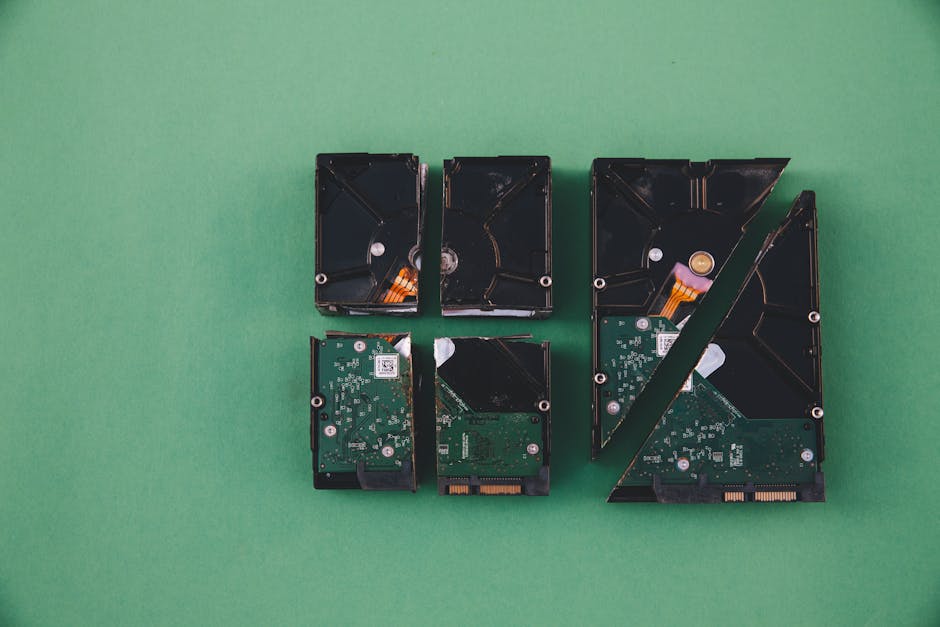
Recycle Your Hard Drives and SSDs
Reviewed by
Findley Sykes , Senior Editor Consumer + Devices · Last reviewed 21 July 2026
Last updated: 21 July 2026
Before you recycle: 3 cheap prep essentials
Back up, remove your SIM, and clean it up first. All under $15.
#Ad · Affiliate links · We earn a commission on qualifying purchases at no extra cost to you.
Estimated recoverable material value
$3.63 USD
Per typical unit (580g). Recyclers offering scrap-rate buyback typically pay around this figure for working or non-working units; refurbishers pay considerably more for working items.
Material breakdown Gold: $2.43Silver: $0.15Palladium: $0.29Copper: $0.44Aluminum: $0.28Steel: $0.04Methodology: 40% of spot price (industry-standard recycler payout). Spot prices: live from Yahoo Finance + LME public data. Material yields from peer-reviewed e-waste studies (UNEP, Cucchiella et al.). Updated 2026-10-16. Try the calculator →
Hard Drives and SSDs are critical components within computers and storage devices, serving as the backbone for data management and retention. These technologies come in various forms: traditional hard drives featuring spinning disks and solid-state drives (SSDs) that use flash memory. Over the past decade, there has been a significant shift towards SSDs due to their faster read/write speeds and greater durability compared to hard drives.
Hard Drives and SSDs can be recycled or refurbished at the end of their life cycle through specialized electronic waste recycling programs. In 2021, over 53 million metric tons of electronic waste were generated globally, with a substantial portion comprising discarded Hard Drives and SSDs. Recycling these components not only helps recover valuable materials but also reduces environmental impact.
for tired Hailong-format e-bike batteries; 800+ charge cycles; UK PAS5612 compliant
Specs: 48V 17.5Ah, integrated frame mount
Typical price: £329-£449
Why it matters: extends life of higher-powered e-bikes 3-5 more years; avoids £1,500+ full bike replacement
Specs: 64 precision bits + spudgers + suction handles
Typical price: £59-£79
Why it matters: the standard kit for opening every phone, laptop, tablet and games console made since 2010; supports right-to-repair
Jump to: Check what this device is worth Find a drop-off point near you Search by postcode or ZIP Hard Drives and SSDs: complete disposal + recycling guide (2026-05-20)
Three compliant disposal routes
Route Cost Best for Manufacturer take-back Free Replacing the device (like-for-like purchase) Retailer drop-off (Best Buy, Currys, Apple, Samsung)Free Small devices, no new purchase needed Certified local recycler Free or low fee All devices including bulk + older equipment
Find specific providers via Recycling Locator + verify producer programmes via Manufacturer Take-Back Finder .
What's typically recoverable
Hard Drives and SSDs contains a mix of materials with different recovery economics:
Metals (aluminium, copper, steel, gold, silver): 60-95% recovery at certified processorsPlastics (housing, internal trays): 40-70% recovery depending on plastic gradeGlass (screens, lenses): 50-80% recovery via specialist streamsRare earth elements (magnets, motors): 5-30% recovery (improving as processes mature)Lithium-ion batteries (where present): require separate hazmat streamLive recoverable material value lookup: Scrap Value Calculator .
Compliance + penalties
Improper disposal of Hard Drives and SSDs triggers measurable penalty exposure:
EU WEEE Directive 2012/19/EU + UK WEEE Regulations 2013 : producer + waste-generator liabilityEPA RCRA 40 CFR Part 273 : federal Universal Waste Rule covers e-wasteUS state e-waste laws : 25 states have mandatory laws (California, New York, Connecticut, Maine, Minnesota toughest enforcement)UK GDPR + EU GDPR : personal data on disposed device triggers separate liability if not properly sanitisedPenalty exposure typically: £5,000-£50,000 per incident (UK), €1,000-€10,000 (EU), $1,500-$25,000 (US state-level), up to $76,764/day under EPA RCRA. Check specific risk via E-Waste Fines Checker .
Data sanitisation requirements
For data-bearing devices, standards by data sensitivity:
Consumer / personal data : factory reset + sign-out of cloud services is the minimumBusiness / commercial data : NIST 800-88 guidelines Clear or Purge required, per-drive Certificate of DestructionRegulated data (HIPAA, GLBA, GDPR special category, PCI DSS): NIST 800-88 Purge for SSDs (cryptographic erase + cell-level verify), DoD 5220.22-M or physical shred for HDDs, NAID AAA certified provider, audit-defensible chain-of-custody documentationFree Certificate of Destruction template: GDPR Data Erasure Certificate Generator .
Frequently asked questions
Is disposal of Hard Drives and SSDs actually free? For consumer drop-off + mail-in: usually free at point of use, funded by producer-pays framework. Exceptions: bulk appliances ($25-$50 pickup), CRT TVs/monitors ($19-$50), oversized batteries.
What if my Hard Drives and SSDs unit still works? Don't recycle - trade in or donate first. Working devices have meaningful resale value via Music Magpie / BackMarket / eBay. Compare via Trade-In Best Price Finder .
Will the recycler resell my data? Reputable recyclers either (a) wipe to NIST 800-88 standard before any onward sale, or (b) physically destroy data-bearing media before reuse path. Ask which method applies before drop-off.
Can I do this for free if I'm not buying a replacement? Most jurisdictions: yes. EU WEEE + UK WEEE require retailers offering similar products to accept like-for-like even without new purchase (some retailers limit to in-store only). US state programmes vary; California + New York + Washington have the strongest free-recycling networks.
Related guides + tools
---
Framework verified against EU WEEE Directive 2012/19/EU + UK WEEE Regulations 2013 + EPA RCRA 40 CFR Part 273 + US state e-waste laws + NIST SP 800-88 Rev 1 as of 2026-05-20. Operated by Defining Style Limited (UK Companies House 10572391, ICO Registration ZA711914). Rules update annually - verify current penalties on enforcement-authority sites before relying on figures.