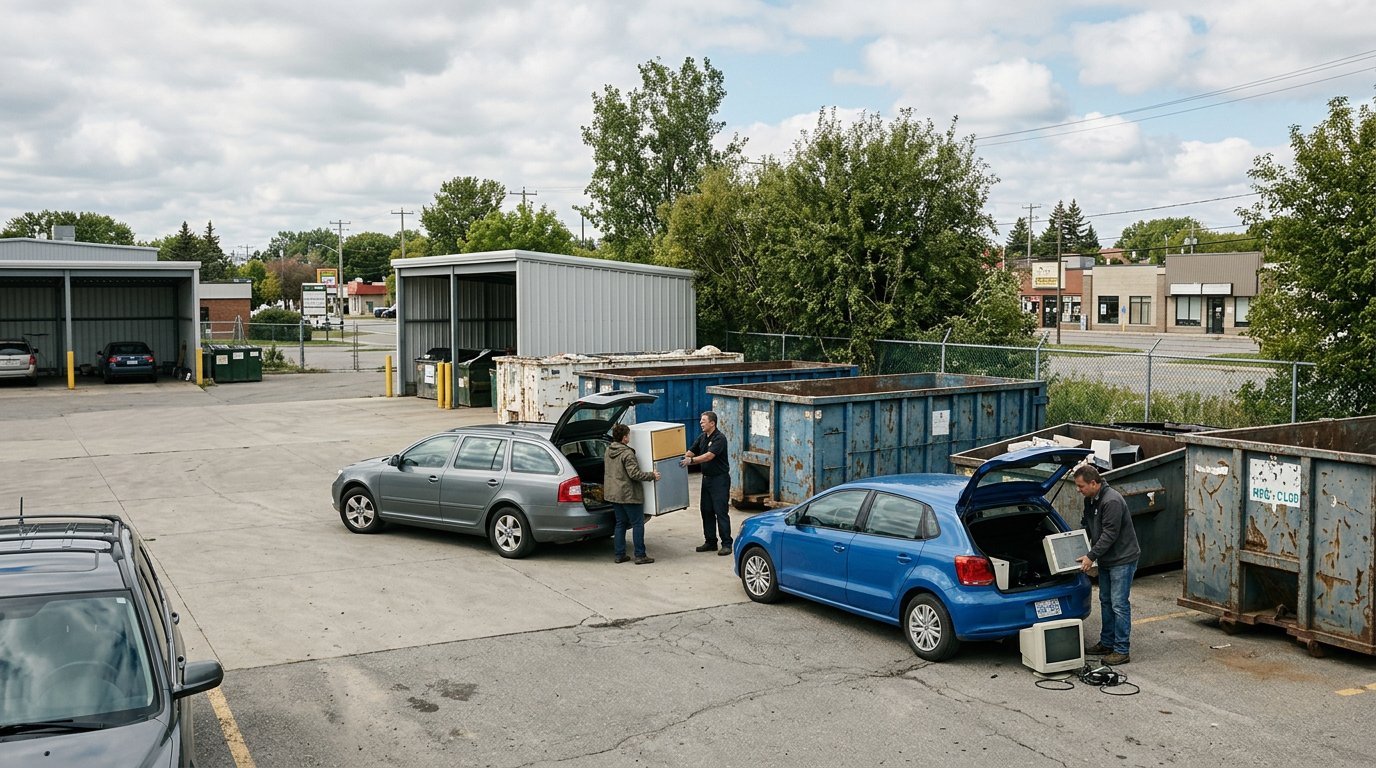
A refrigerator is the most regulated appliance in the average home, because the sealed circuit and the foam insulation both hold refrigerant that must be recovered rather than released. That rules out the skip and most scrap yards, and it shapes every route below.
Where to take an old refrigerator
A utility rebate programme. Many electricity utilities collect an old working second fridge free and pay a rebate for it. A fridge from the 1990s can use several times the electricity of a current model, so the utility is buying back the load. This is the only route that pays, and it usually requires the unit to be running when collected.
Haul-away when the replacement is delivered. Appliance retailers take the old fridge away on delivery, free or for a small fee, arranged at the point of order rather than on the day.
Municipal bulky waste collection. Most cities accept fridges, flagged separately so they reach a processor with refrigerant recovery. Some charge per item.
A certified appliance recycler. For units that are broken and not being replaced.
What it costs
| Route | Typical cost |
|---|
| Utility rebate programme, working units | Free collection plus a rebate |
| Retailer haul-away with a new delivery | Free to modest |
| Municipal bulky collection | Free to moderate |
| Certified appliance recycler | Charged per unit |
| Junk removal service | Highest, priced per load |
What proper processing recovers
A responsibly processed fridge gives up its refrigerant, its compressor oil, the blowing agent held in the foam, plus steel, aluminium and copper. Handled badly, the refrigerant and the foam agent are released and the environmental cost dwarfs the value of the metal. This is the reason a fridge cannot simply be crushed.
Before collection
Empty and defrost it, wipe it out, and tape the door shut or remove the door entirely if it is being stored outside before pickup. An unsecured door on a discarded fridge is a genuine child-entrapment hazard and removing it is a legal requirement in many places.
Related guides
Frequently Asked Questions
Where can I get my old fridge picked up free?
Three free options: (1) EPA RAD program through your electric utility (38 US states), (2) retailer haul-away with new fridge delivery (Home Depot, Lowe's, Best Buy, Costco), (3) municipal bulky-waste pickup day (every US city offers them — schedule via 311).
How much does it cost to dispose of a refrigerator?
Free with a replacement fridge delivery from major retailers. Standalone disposal: $25-$75 for standard top-freezer fridges, $50-$100 for French door, $100-$200 for sub-zero or built-in units. Commercial walk-ins run $200-$600.
Will the city pick up my old refrigerator?
Yes — every US city offers bulky-waste collection that accepts appliances. Some are scheduled monthly, some quarterly. Schedule via your city's 311 line. Most are free; some charge $25-$50 for appliances containing refrigerant.
Can I scrap an old fridge for cash?
Yes, but the refrigerant must be recovered first by an EPA Section 608 certified technician. Once you have a recovery certificate, scrap yards typically pay $25-$60 for a residential fridge ($80-$200 for commercial). The HVAC contractor may charge $50-$100 for refrigerant recovery, eating into the scrap profit.
Is it legal to throw a fridge in the trash?
No. Federal law (Clean Air Act §608) prohibits venting refrigerant — penalties up to $44,539 per day per unit. Most cities also ban appliances from regular trash. Always use the EPA RAD program, retailer haul-away, or municipal bulky-waste day.